The beauty of faith across the Himalayas: The world’s first Guanyin and Tara thangka art exhibition opens in Auckland.

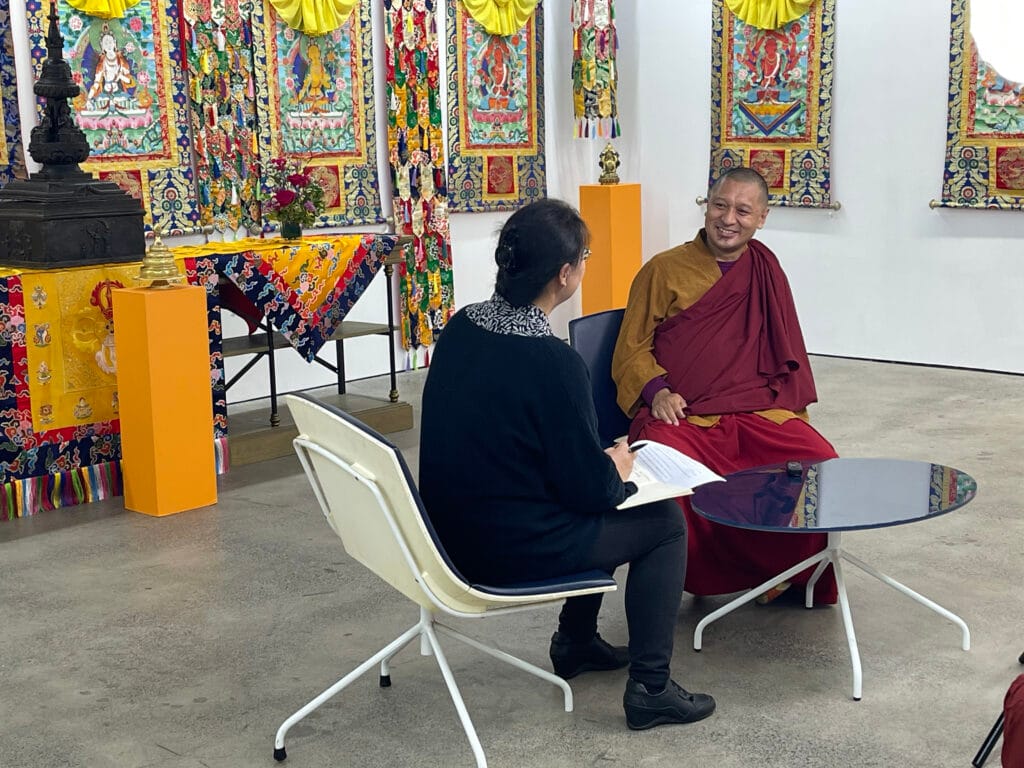
According to a report by Sophie from the New Zealand Chinese Herald, on May 11th, the “Dance of Emptiness and Miraculous Power” Guanyin and Tara Thangka Art Exhibition will open in Auckland. This is the world’s first thematic exhibition of Thangka art focusing on Guanyin and Tara, attracting widespread attention from the Buddhist community, the art world, and New Zealand’s multicultural community. On the eve of the exhibition’s opening, the New Zealand Chinese Herald interviewed Khenpo Rinpoche, a distinguished scholar of Tibetan Buddhism, Thangka collector, and connoisseur.
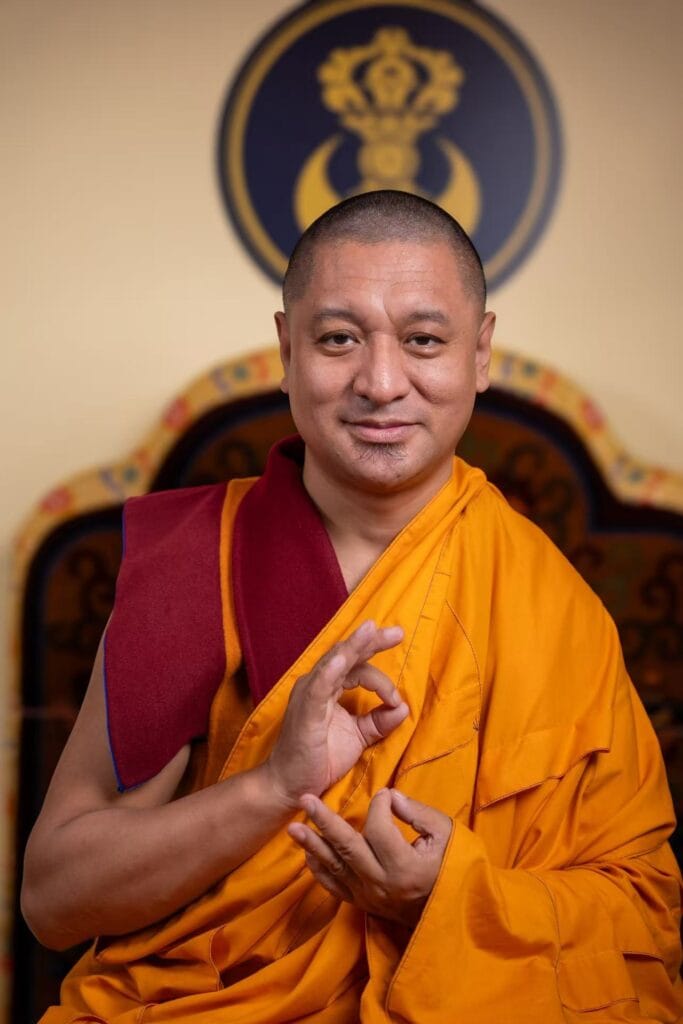
Rinpoche has both Mongolian and Tibetan ancestry, and in his youth, he was recognized by several high lamas of Tibetan Buddhism as the reincarnation of Rigdzin Chenpo Tshewang Norbu. He is a highly respected master in several Buddhist lineages and has authored thirty-five volumes of works on Buddhist philosophy, history, and biographies, demonstrating profound expertise in the field of Tibetan Buddhist philosophy.
The Auspicious Connection with Thangka Paintings
Rinpoche explained, “Thangka (Tibetan: thang ka)” means “flat painting” in Tibetan, and it is a highly representative form of religious painting art in Tibetan Buddhism. Thangka paintings are found in almost every monastery and Tibetan household, used for offerings, meditation, and commemorating sacred images, and are also often collected as Buddhist works of art.
Although Thangka painting is most developed in Tibet, its influence has spread to India, Nepal, Mongolia, and southwestern China. A complete Thangka painting takes months or even years to design and paint. It is painted on cloth or silk, using mineral pigments, supplemented with gold and silver powder, resulting in vibrant colors that ensure its longevity and dignified appearance. Thangka paintings have complex compositions and their content includes Buddhas, deities, protector gods, and the stories of eminent monks and masters. There are many different schools of Thangka painting, all emphasizing the standardization of iconography and rituals.
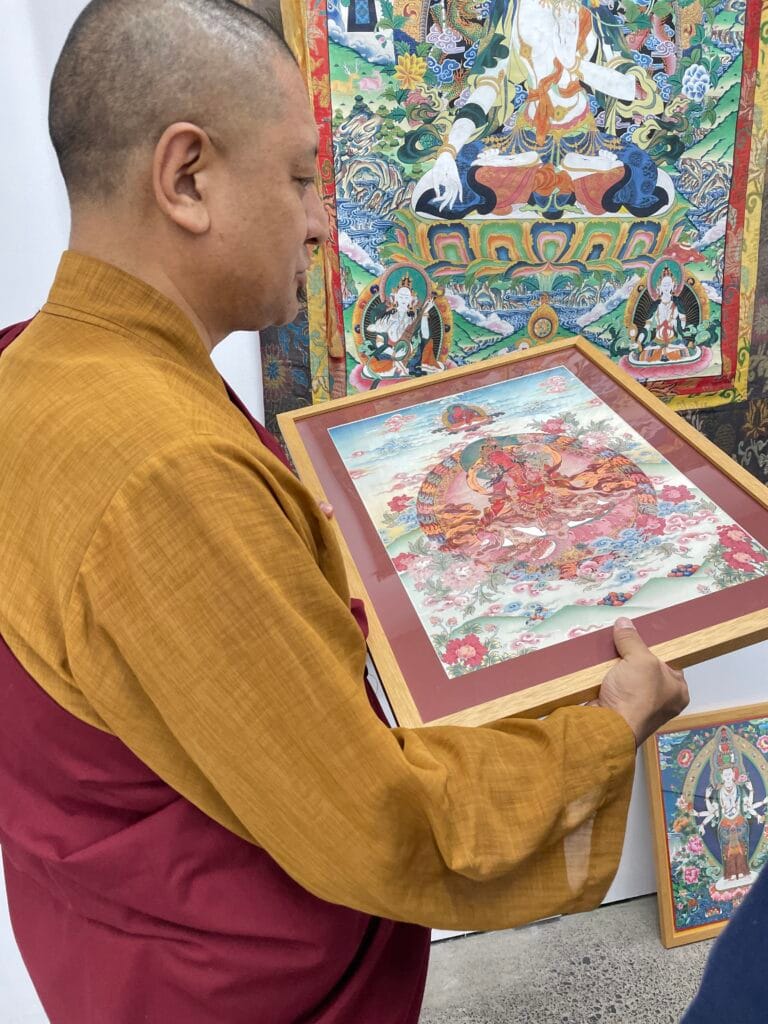
Rinpoche was exposed to a large number of precious thangkas (Tibetan Buddhist paintings) from a young age within his family. He studied under a master who was proficient in Buddhist art, gradually learning to identify the artistic and religious value of thangkas. Later, Rinpoche began collecting thangkas for devotional purposes and also commissioned many thangkas to be painted. His collection of thangkas, both large and small, now numbers five or six hundred, encompassing various lineages and styles. Some thangkas are as tall as four meters, depicting majestic bodhisattvas; others are smaller but incredibly detailed.
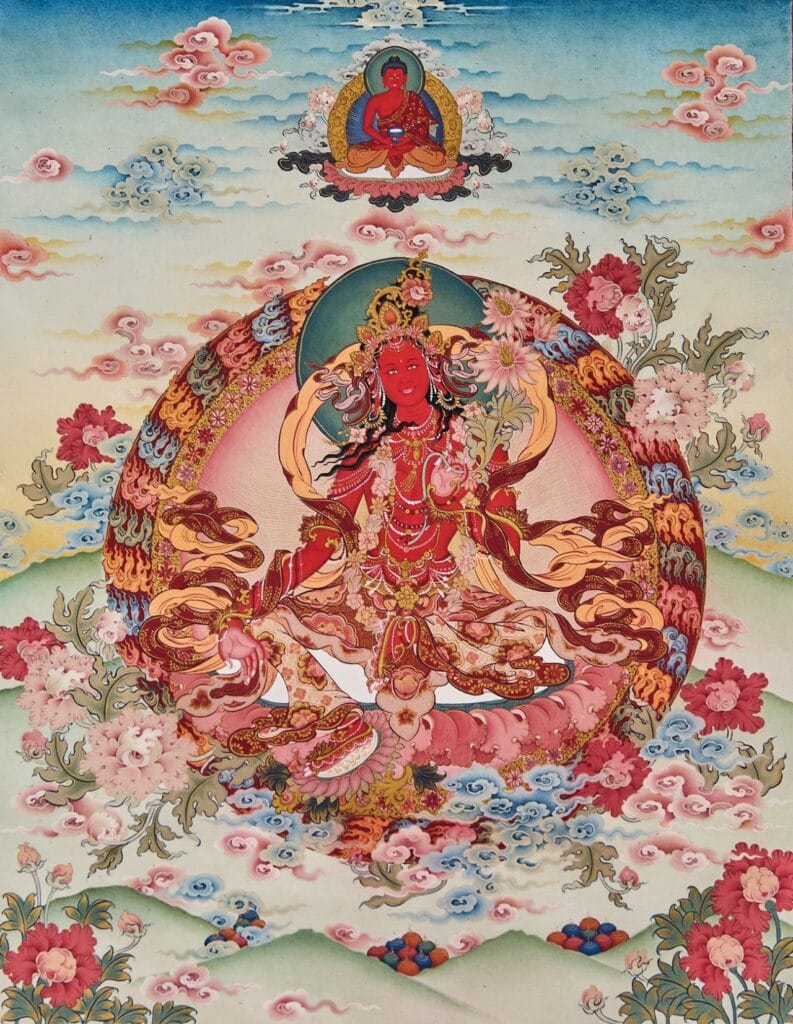
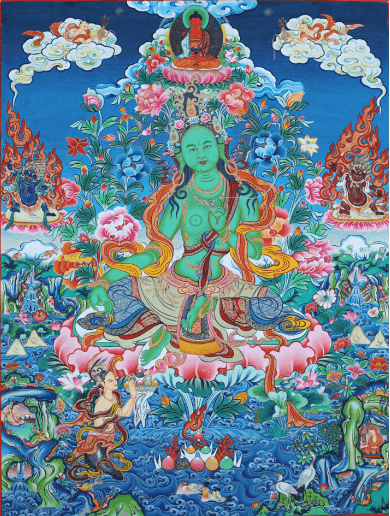
He specifically mentioned a beautiful Green Tara thangka (pictured below), painted by a young lama in his twenties. At that time, the lama was in his most focused state, with excellent eyesight and a steady hand, and it took him two years to complete the painting. Although the painting is not large, the lines are delicate, the coloring is exquisite, and it possesses a powerful religious impact, making it truly breathtaking.
Avalokiteshvara and Tara Thangka Art Exhibition
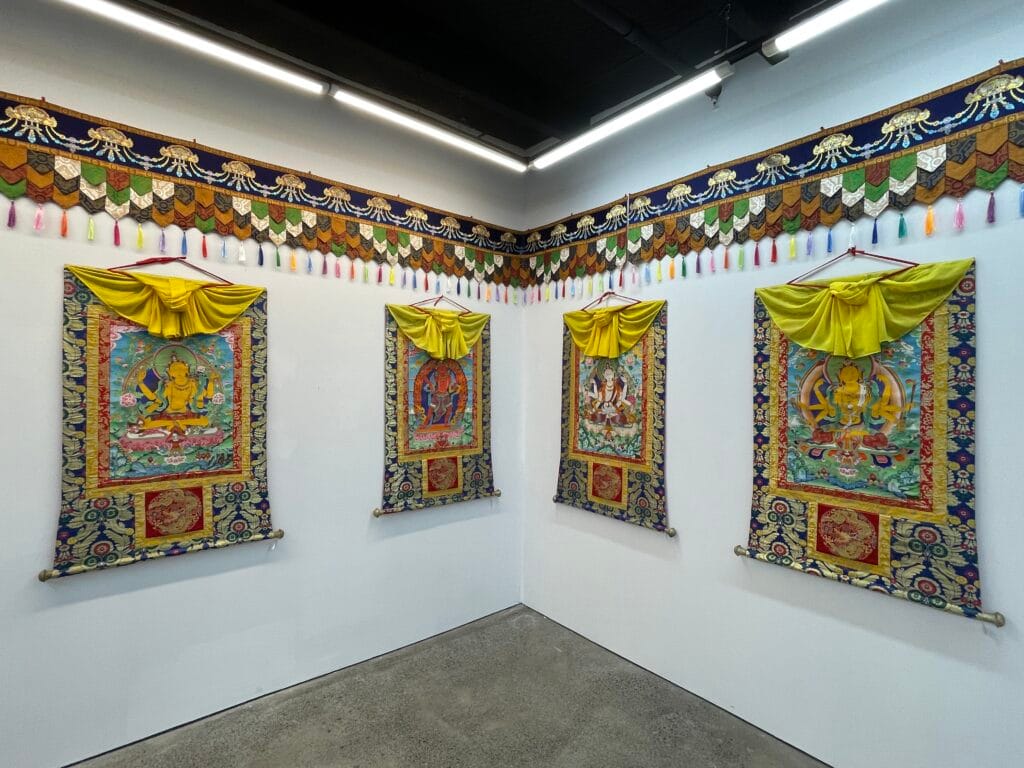
All the thangkas in this exhibition are from the private collection of Rinpoche, with some specially transported from overseas to New Zealand. The exhibition features 49 works, mainly painted over 20 years ago. Focusing on Avalokiteshvara and Tara, this is the first thangka exhibition in the world with this as its central theme, jointly organized by Webb’s Asian Art Department and Padma Ati Buddhist Institute.
The term “Mystical Power” in the exhibition title originates from the Buddhist concept of “miraculous power and divine efficacy” or “inconceivable merit and blessings.” The Rinpoche explained that this refers to the immeasurable compassion and wisdom manifested by Buddhas and Bodhisattvas after their enlightenment, used to benefit all sentient beings.
The exhibition theme emphasizes the worship of female deities in Buddhism. The Rinpoche stated that Buddhism teaches that “all sentient beings possess Buddha-nature,” and there is no inherent superiority or inferiority among beings in terms of their Buddha-nature. On the path of spiritual practice, both men and women can attain Buddhahood. Therefore, Buddhas and Bodhisattvas appear in both male and female forms. Avalokiteshvara and Tara are representative female Bodhisattvas in Buddhism, symbolizing the perfection of compassion and wisdom. New Zealand society values the status of women, and this cultural resonance makes the exhibition even more meaningful locally.
The Rinpoche also pointed out that in Tibetan Buddhism, Avalokiteshvara (Guanyin) is the source of compassion, and Tara is the manifestation of Avalokiteshvara’s vows; the two are two sides of the same coin. Therefore, Tara is closely related to Avalokiteshvara, but there are still differences in their practice methods.
In Chinese, Tibetan, and Nepalese Buddhism, Avalokiteshvara Bodhisattva is considered a symbol of great compassion, manifesting in numerous forms, such as the Thousand-Armed and Thousand-Eyed Avalokiteshvara, White-Robed Avalokiteshvara, and Hayagriva. Similarly, Tara also has many manifestations, such as Green Tara, White Tara, Red Tara, and Blue Tara, each symbolizing different powers of salvation.
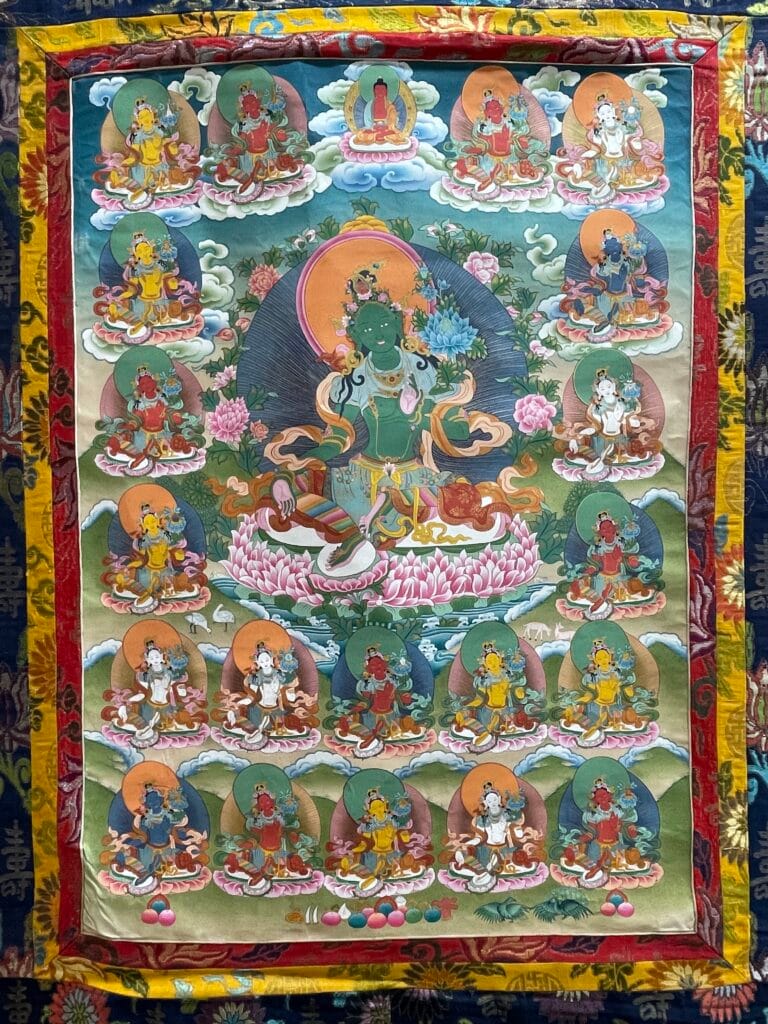
In Tibetan Buddhism, the practice of Tara is divided into single deity, three deities, five deities, and twenty-one deities. For example, the three Taras involve practicing with Green Tara, Blue Tara, and the yellow Luminous Buddha Tara together. The most famous is the “Twenty-One Taras,” which, according to the classic text “Twenty-One Praises to Tara,” showcases Tara’s different forms and compassionate vows.
Rinpoche emphasized that both Avalokiteshvara and Tara are important deities who guide sentient beings to liberation from suffering and the attainment of happiness, and who help develop inner compassion and wisdom. They hold profound significance for practitioners.
The Tara thangkas displayed in this exhibition are vibrant in color and depict diverse expressions, each representing Tara’s different vows and protective powers.
The Blessing of Art and Faith
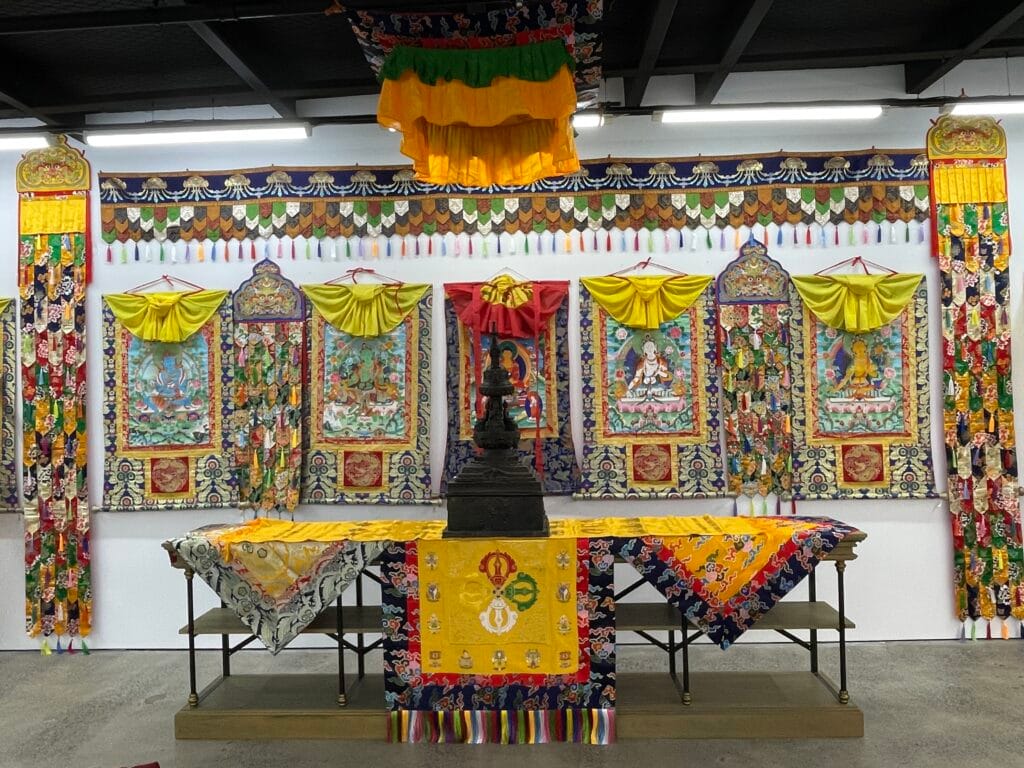
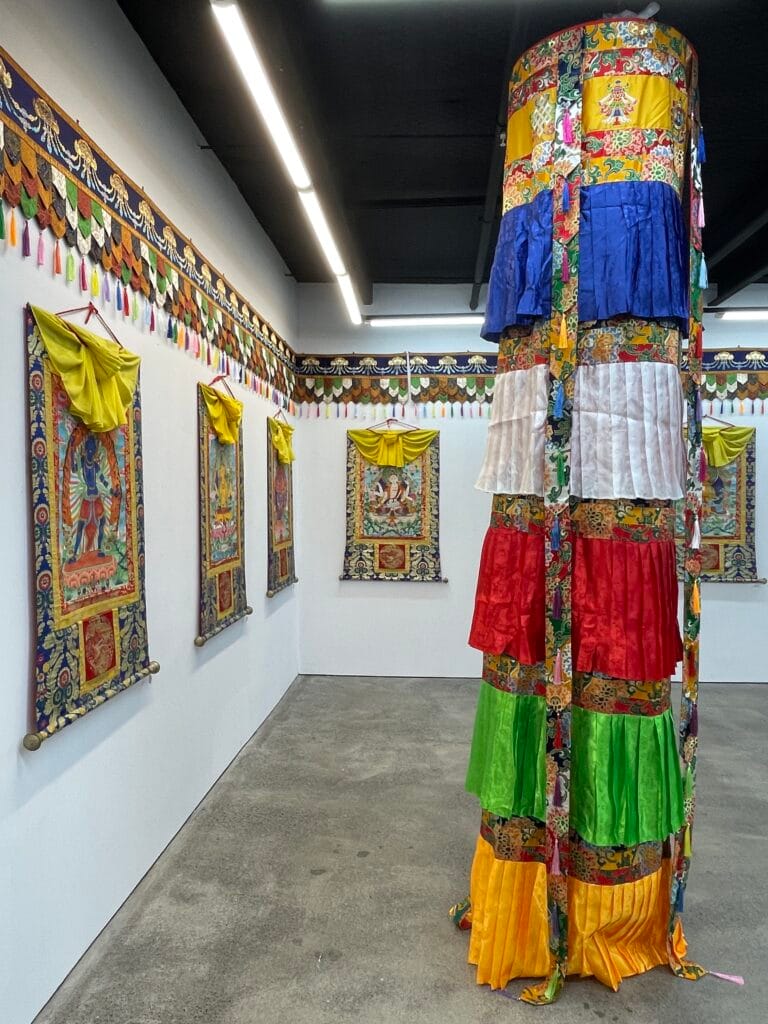
The exhibition hall design of “The Marvelous Power of the Void Dance” Avalokiteshvara and Tara Thangka Art Exhibition incorporates the visual language of Tibetan Buddhism. The banners, pennants, and canopies hanging from the ceiling are all common elements in Buddhist ceremonies, symbolizing the solemn and enduring presence of the Dharma and its universal salvation of sentient beings. A thangka of Shakyamuni Buddha is enshrined in the center, with a Nepalese stupa in front. The stupa’s base is carved with the four major events of Shakyamuni Buddha’s life—birth, renunciation, enlightenment, and nirvana—fully showcasing the Buddha’s extraordinary life.
The Rinpoche said that for ordinary viewers unfamiliar with Buddhism, thangka paintings can be appreciated as works of art, understood through their craftsmanship, color schemes, composition, and symbolism. These works originate from the Himalayan cultural sphere and are imbued with the artists’ dedication and effort.
For those with faith, however, thangka paintings are not merely paintings, but also a medium for connecting with Buddhas and Bodhisattvas. Through devout worship, contemplation, and offerings, one can cultivate virtuous thoughts and merit, deepening one’s spiritual practice—this is known as “blessing.”
The Rinpoche mentioned that excellent thangka painters, in addition to outstanding skill, must also possess faith and spiritual practice. Some thangka paintings, though simple in technique, are considered precious because they are created by virtuous practitioners, imbued with their pure hearts and blessings. This combination of faith and art is precisely the religious characteristic that elevates thangka paintings beyond ordinary art.
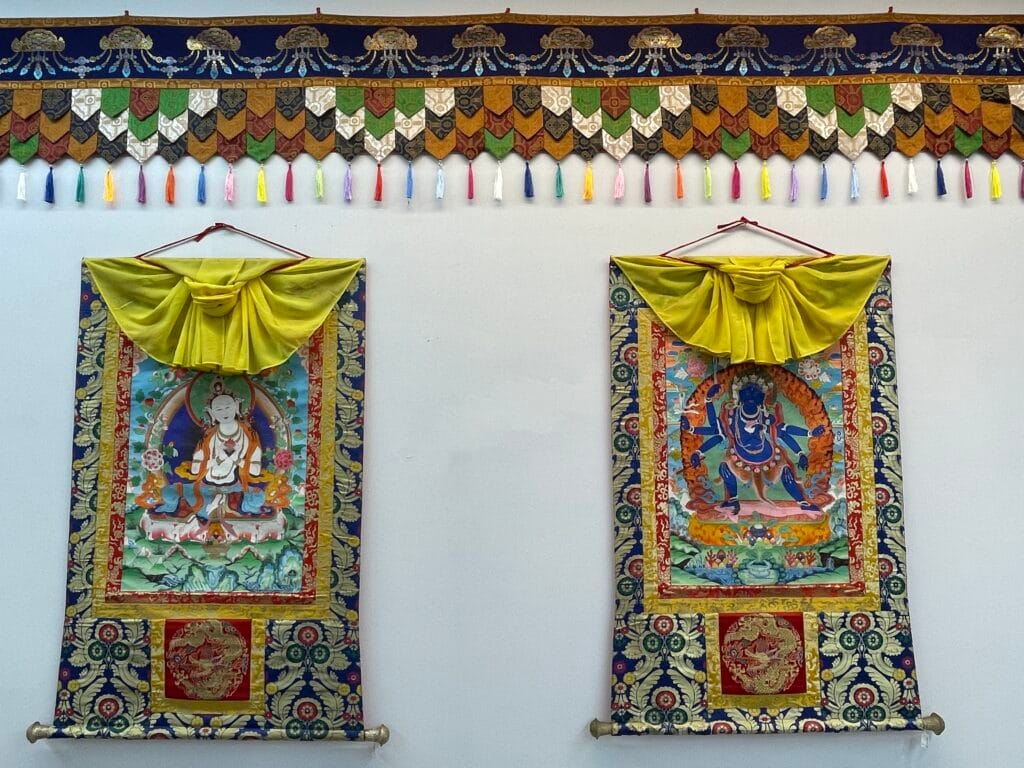
The Rinpoche hopes to use this opportunity to introduce the beauty of Thangka art to the public, and to help viewers understand that “religious art” is not only a sacred symbol, but also a cultural medium that allows for inner reflection. You don’t need to be a Buddhist to feel peace, solemnity, and hope from Thangka paintings. That is the power of art.
On May 11th at 2 PM, the opening ceremony of the “Dance of Emptiness and Miraculous Power” Guanyin and Tara Thangka Art Exhibition will be held. The exhibition will run until June 22nd, open on Saturdays and Sundays from 1 PM to 5 PM, and by appointment at other times. Whether you are an art enthusiast or a Buddhist follower, you are welcome to experience the compassionate wisdom of Guanyin and Tara, and appreciate the solemnity and subtlety of Himalayan Buddhist art.
Audio:
Video:Calling out to my loving mother.
Original article link: New Zealand Chinese Herald
https://www.chineseherald.co.nz/news/lifestyle/tara-thangka/
Responses