017-020 Regarding the practice of Tara for achieving success in all endeavors.
017 Regarding the Practice of Tara for Accomplishing All Activities (1)
How to practice after receiving the Tara empowerment for accomplishing all activities?
Disciple asks: Venerable Master, how should I practice after receiving the Tara empowerment for accomplishing all activities?
Venerable Master replies:
If you can practice in retreat, four sessions a day (morning, late morning, afternoon, evening, two to three hours per session), that’s excellent. If not, then three sessions a day (morning, afternoon, evening). If that’s still not possible, then two sessions or one session, at a convenient time in the morning or evening. What if you’re too busy to even do that?
At least recite the refuge and bodhicitta vows (the first two lines) three times, the fundamental Tara mantra, and then the standing Tara mantra seven, twenty-one, or one hundred and eight times. Reciting the mantras of the other four deities of the four activities one, three, or seven times is also acceptable. Finally, dedicate the merit!
018 Regarding the Practice of Tara for Accomplishing All Activities (2)
How to combine the Angshong Queen’s Gradual Meditation with the practice of Tara for accomplishing all activities?
Disciple asks: Venerable Master, I am currently practicing the Angshong Queen’s Gradual Meditation taught by you. How can I combine it with the practice of Tara for accomplishing all activities?
Venerable Master replies: That’s excellent! The Angshong Queen’s Gradual Meditation can be combined with any Dharma practice. First, recite the refuge and bodhicitta vows according to the Tara ritual for accomplishing all activities.
When reciting the fundamental Tara mantra, visualize the Guru, Padmasambhava, and all Buddhas and Bodhisattvas of the ten directions manifesting as Tara, inseparable from Tara. Pray using the Guru Yoga method. Combine the recitation of the Tara mantra for accomplishing all activities with meditation, and finally dedicate the merit.
The Angshong Queen’s Gradual Meditation can be combined and integrated with any Dharma practice without any problem! At this time, there’s no need to specifically practice its original ritual! Whether practicing Tara, Padmasambhava, Vajrasattva, etc., it can be combined with any Dharma practice.
019 Regarding the Practice of Tara for Accomplishing All Activities (3)
How to reach the Pure Land through the practice of Tara?
Disciple asks: Venerable Master, the Tara for accomplishing all activities is a special Dharma practice combining five deities. How can one reach the Pure Land through the practice of Tara? Venerable Master Bao replied: Above Tara’s head is Amitabha Buddha (Buddha of Infinite Life). During practice, one visualizes Tara and directly merges with Amitabha Buddha above her head, instantly arriving in the Pure Land! This is a swift, quick, and unobstructed method and practice for entering the Pure Land!
020 Regarding Tara (4)
What is the meaning and purpose of the Utpala flower held in Tara’s hand?
Disciple asked: Venerable Master, what is the meaning and purpose of the Utpala flower held in Tara’s hand?
Venerable Master Bao replied: It has great purpose!
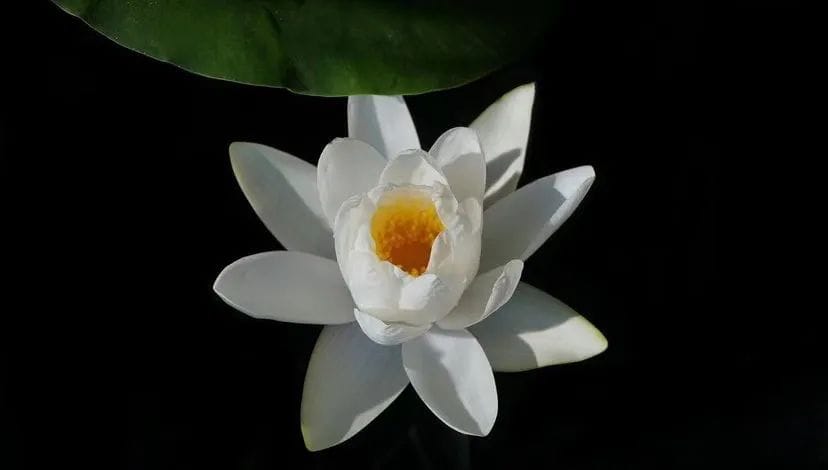
The Utpala flower is a blue lotus, the rarest and most special. It doesn’t grow in water, but on mountains—a mountain lotus, a blue Utpala flower. It is inherently rare, like the Three Jewels, like the Tara Dharma method, and the time for practice is precious, and the human body of the practitioner is very rare; it is a symbol of rarity!
Secondly, it is related to Tara herself. Every Buddha and Bodhisattva, when they initially made their vow of Bodhicitta, or when special circumstances matured, offered a mandala to their guru. When Tara made her great vow of Bodhicitta before Amoghasiddhi Buddha, she said: “In every life, I will manifest as a female to liberate sentient beings, never tiring or becoming complacent!” And she offered a blue Utpala flower to Amoghasiddhi Buddha and the ancient Buddha, Guanyin. There is such a legend!
Because of this connection, the Buddhas and Bodhisattvas bestowed this flower upon Tara, making it her Dharma instrument, also reminding her not to forget her vow!
Therefore, when shown as Tara’s Dharma instrument, it has the effect of removing obstacles, bestowing blessings, and generating Bodhicitta!
In terms of its inherent nature, the lotus grows in muddy water without being polluted, representing the pure Buddha-nature of sentient beings, and when afflictions and defilements are purified, it blossoms like a lotus!