
Kurukulla Empowerment and Vase Practice – Third Session,Singapore, September 10, 2025
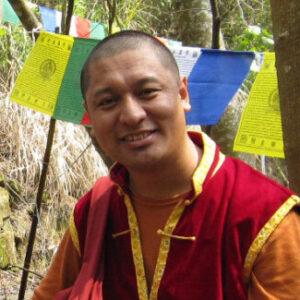
噶陀仁珍千宝仁波切 2025-09-27
Amitabha Buddha. Today we’ll discuss an important state in spiritual practice—joy.
When we come together to practice a Dharma method, we are actually accumulating a secret accumulation of merit. The power of this shared practice, combined with each person’s heartfelt faith and joy, makes this Dharma method a truly excellent aid for the benefit of ourselves and others.
Joy in practice typically arises in three stages: Initial Joy: The natural arising of faith and joy when you first hear the name of a Buddha, Bodhisattva, or deity, and understand their virtues, vows, and pure states; Joy During Practice: During actual practice, because you possess faith and Bodhicitta, you clearly understand that you are doing something pure, correct, and extremely valuable; this confirmation brings deep joy; Joy at Completion: The satisfaction and contentment that arises at the end of each practice session, feeling that you have accomplished a meaningful and great undertaking.
The Dharma itself, from beginning to end, is inseparable from joy. In the initial stages of learning, there is the joy of “hope”—the belief that one will surely attain Buddhahood in the future; during practice, there is the joy of “extinguishing afflictions”—with each practice, a portion of afflictions is extinguished; and upon completion, there is the joy of “achievement.” Therefore, Tibetan Buddhist practitioners often wish each other “abundant joy in Dharma,” which is not merely politeness, but a state that should exist in spiritual practice.
Some may ask: Doesn’t the beginning of spiritual practice involve contemplating the suffering of samsara and cultivating renunciation? Doesn’t this contradict joy?
Not at all. The Buddha preached the “path to the cessation of suffering,” first addressing suffering to help us bravely face the truth of life and recognize our current situation. This is a method, not the ultimate goal. Just as Shakyamuni Buddha practiced asceticism for six years, or when we cultivate compassion and contemplate the suffering of all beings, we may experience sadness and tears along the way, but these are normal.
Contemplating suffering is to generate the motivation and hope to seek liberation. Once genuine renunciation arises, the light of hope for liberation will illuminate the heart, and temporary depression will naturally transform into the power to move forward.
The effectiveness of spiritual practice hinges on the mindfulness before it begins.
If we take the time to adjust our mind and body, entering into practice with pure motivation and correct thinking, even just half an hour will bring powerful results. You will clearly feel the practice’s strength and the improvement in your physical and mental state.
Conversely, if you merely rush through the ritual without mindfulness, although you will still accumulate merit and blessings, the effect will be limited—like offering alms without truly feeling a connection with the Buddhas and Bodhisattvas.
The effects of practice manifest in three aspects: Eliminating afflictions: During practice, afflictions lessen or even cease; Removing obstacles: Obstacles often stem from inner attachments and discriminations. For example, if you cannot let go of resentment towards someone, even if they have long forgotten, you remain hindered by negative emotions, ultimately affecting your energy channels and harming your health. Through practice, these mental obstacles can be purified, thus influencing your physical health; Opening wisdom: When you reach a certain level in your practice, you will feel relaxed, at ease, and confident, naturally developing a firm understanding of the Dharma—this is a sign of the opening of wisdom.
How can you determine if you are a “spiritual practitioner”? You can ask yourself: Do you often pray for all sentient beings? Do you feel grateful for their kindness and wish to repay them? Do you frequently contemplate the virtues of the Three Jewels and have faith in the Dharma? Do you possess right mindfulness and awareness, able to perceive your own physical, mental, and karmic states, and know how to use the Dharma to counteract afflictions?
If the answer is yes, then you are a true practitioner. As for the depth of your practice, that requires time to accumulate. Some people progress quickly, while others regress; this is all normal. As long as you continue your practice, your skill will eventually stabilize, and you will ultimately overcome afflictions.
Finally, I urge everyone: Regardless of which Dharma you practice, never forget these three fundamentals: faith in the Three Jewels, compassion for all sentient beings, and constant right mindfulness and awareness.
The Three Jewels encompass the essence of all teachings. Taking refuge in the Three Jewels and using these three minds as the guideline for practice, then every mantra recited and every Dharma practice performed is a transmission of truth, benefiting sentient beings, both visible and invisible.
Our very existence is for the benefit of sentient beings; our current practice is the fulfillment of this mission. May everyone practice in accordance with the Dharma with a pure and joyful mind.