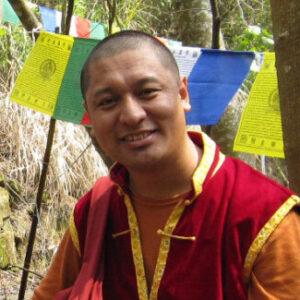
Langga Rinpoche, the Great Accomplished One of Kurukulla
噶陀仁珍千宝仁波切 2025-06-22
Teachings given at the Kurukulla Dharma Assembly, Miaocheng Dharma Garden, March 15, 2019
Langjia Rinpoche has passed away. His Kurukulla teachings are the most complete, and he was a master of this lineage, widely recognized as an accomplished Kurukulla practitioner. The 10th Panchen Lama and the Gontang Master both praised him as the successor of this generation of Kurukulla practitioners. Many great masters in Tibet, regardless of sectarian affiliation, also praised him, including Sakya Trichen Rinpoche, who considered him an accomplished Kurukulla practitioner.
His main practices consisted of three practices: Manjushri, Vajrayogini, and Kurukulla. He practiced Kurukulla from a young age, reciting her mantra over 300 million times in his lifetime, including 100 million times continuously. While in Tibet, many masters sought this teaching from him, and he transmitted the complete empowerments to most of them. He did not have many disciples.
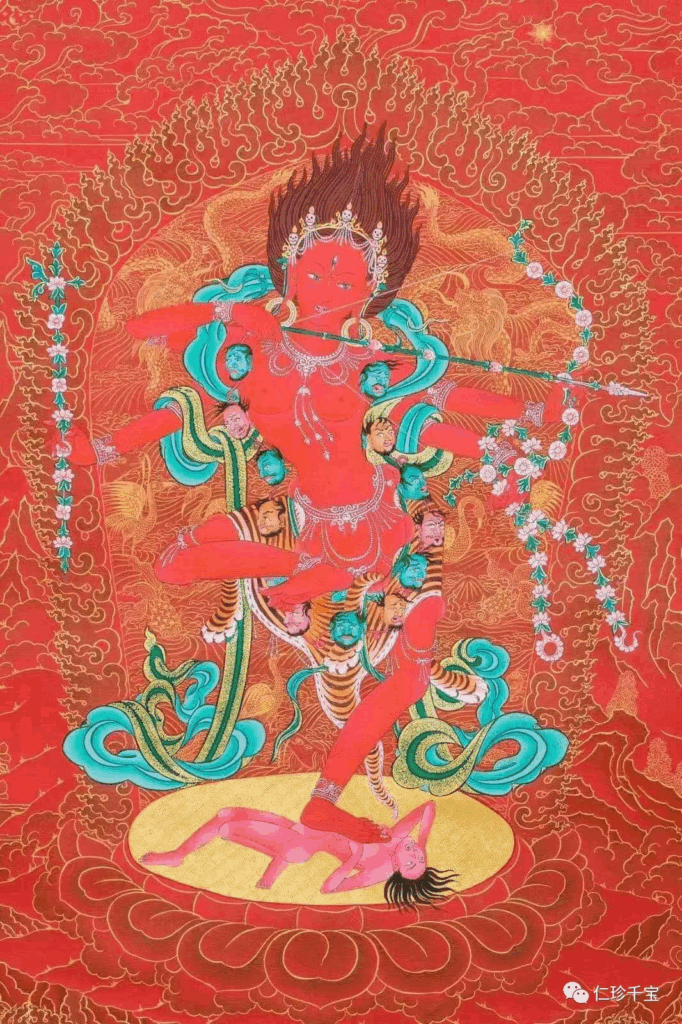
At that time, many monasteries in Tibet were making protective wheels, mandalas, and consecrated Buddha images of Kurukulla for the flourishing of Buddhism, and most of these were done by Langga Rinpoche. He initially received Kurukulla empowerments from a Khenpo at Rega Monastery in Qinghai, and later from a Geshe at Xia’ou Monastery. His earlier studies were rather fragmented; he received complete oral transmissions and empowerments from Master Gongtang in the 1990s. Langga Rinpoche told me that he entered the monastery as a reincarnated lama at the age of four or five, and practiced Kurukulla from a young age, but his true practice began in his teens. He observed the eight precepts over three thousand times in his life, almost alternating between speaking and not speaking, and holding two uninterrupted sessions a day, each lasting two hours. He practiced Vajrayogini and Kurukulla extensively, but also frequently practiced Manjushri, Peaceful and Wrathful Manjushri, and Yamantaka.
He deeply respected each of the three great emanations of Manjushri in Tibetan Buddhism: Tsongkhapa, Sakya Pandita, and Longchenpa. Among the Nyingma masters, only Langga Rinpoche could recite the three treatises—the Treasury of Dharmadhatu, the Treasury of Wish-Fulfilling Jewels, and the Treasury of Words and Meanings—from memory. He greatly admired Longchenpa, and could recite three of Longchenpa’s Seven Treasures from memory. He performed Longchenpa’s Tsok offerings almost every month on the tenth day of the tenth day, and his own writings include praises and rituals of Longchenpa.
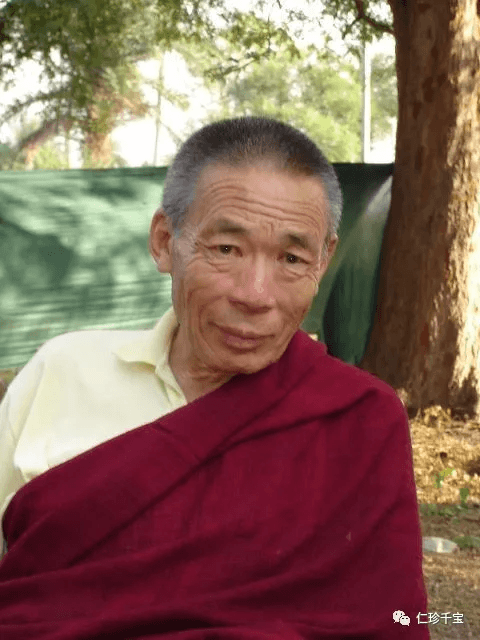
Langga Rinpoche was a very strict teacher. We didn’t dare ask him questions casually because he often scolded people, and it wasn’t easy to get teachings from him. Someone once asked me which of my close teachers was the fiercest. I think it was my own teachers, Thubten Norbu and Langga Rinpoche. Many people think Shakya Rinpoche was fierce, but he wasn’t. He just looked fierce and serious, and he didn’t talk much. When he was unhappy, he would scold and then fall silent. Even if you apologized, you wouldn’t know if he accepted it. Many people were afraid of Shakya Rinpoche. I studied under him for over four years, but I never heard him scold anyone. But Langga Rinpoche not only scolded but also hit people. I was lucky enough not to be hit. Many people sought teachings from him, and it was very difficult to obtain them. When I sought the Vajrayogini teachings, I requested them many times over five or six years, both in person and by letter, before he finally transmitted them. He spent most of his time reading and reciting scriptures. Besides that, he spent several hours a day reciting scriptures and giving blessings to others. If we asked him unimportant questions while he was chanting, we would be scolded, so we dared not ask casually.
He transmitted the Kurukulla teachings in many monasteries. He was very meticulous in his teachings, and after each transmission, he would test each student to see if they understood. We dared not say we understood, because if we failed the test, he might scold us for half an hour (laughter from the audience). He scolded everyone, whether they were reincarnated lamas or scholars. Therefore, although Langga Rinpoche appeared very compassionate and approachable, he was actually very strict, the opposite of Shazha Rinpoche. Although he was strict, he wouldn’t scold those who weren’t beginners; he wouldn’t scold those seeking blessings or meetings. However, he was very strict with those who sought his teachings and studies.
I haven’t asked him in detail about the karmic connections he had to practice this method, but he said that the practice he did every day was the same as the method he practiced in his past lives. Once, when he transmitted the Treasury of the Dharmadhatu to me, he mentioned that he was the reincarnation of the famous scholar Palden Rinpoche, a disciple of Longchenpa. Although he was nominally recognized and enthroned as the third Langga Rinpoche, he considered himself the reincarnation of Palden Rinpoche. He also mentioned that when he first began studying the Treasury of the Dharmadhatu, he often cried, feeling as if he had studied it before; every word moved him deeply. He had studied it since childhood and could recite it from memory. Therefore, although he did not transmit Dzogchen directly, only orally, he practiced Dzogchen and Naropa Dakini extensively.
I’ve written about Langga Rinpoche’s story before. During his practice of Kurukulla, he experienced many auspicious signs. On numerous occasions, during his rituals or consecrations, red flower petals rained down from the sky, covering the ground—a sight rarely seen in the Tibetan winter. Once, while helping a monastery bury a treasure vase on a mountain, a rainbow appeared in the sky, which later turned into a red light. The area where Langga Rinpoche held his rituals was also bathed in red light, witnessed by many. Another time, he attended a conference in Beijing and visited the Palace Museum afterwards. Emperor Qianlong had invited the Changkya Lama to practice Kurukulla here. Langga Rinpoche, Alashang Rinpoche, and several other visitors took photos together. While taking photos, Langga Rinpoche said, “The Changkya Lama practiced Kurukulla here; this is a blessed sacred site, very auspicious. Let’s recite the Kurukulla mantra.” As he recited it, a lotus arrow descended from the sky and landed on his head. I saw this magnificent lotus arrow with my own eyes when I was fifteen. I used to have a photo of it, but I can’t find it now.
The next day, when he met the Panchen Lama, he wanted to offer the lotus arrow to him. The Panchen Lama said, “You have received the blessing of Kurukulla; this is yours to keep. Take it back with you.” Later, Labrang Monastery in Gansu was building the Gungtang Stupa, the largest stupa in Gansu, several stories high, a local landmark. The initiator was Master Gungtang. Once, when Master Gungtang was conducting a Kalachakra initiation ceremony in Mengqi, Henan, more than 300,000 people attended, including Langga Rinpoche. After the ceremony, Langga Rinpoche wanted to donate money to build the stupa. At this time, Master Gungtang asked him if he could offer his lotus arrow to be placed inside the stupa. Langga Rinpoche immediately agreed, saying that placing it inside the stupa would allow everyone to come and worship, and he was very happy. This lotus arrow was later attached to the main trunk of the stupa. They took photos before the consecration, using a point-and-shoot camera; only two or three were developed. I also have one, but I can’t find the photo now.
He also saw Kurukulla in his dreams several times. The white Kurukulla mantra and the image of Kurukulla would naturally appear on any stone he picked up. He gave me a stone with a bow and arrow on it, which I put in a vase. The Kurukulla statue we’re offering today also contains a small red stone with Kurukulla’s seed syllable on it. When Langga Rinpoche was continuously reciting the Kurukulla mantra one hundred million times, we offered him a coral statue made in Taiwan. The carving was quite special because we couldn’t see what the coral looked like inside when we bought it, but Langga Rinpoche said it was fine to buy it. During the carving process, Kurukulla’s crown, five skulls, and many patterns on her body appeared naturally. Later, when he completed 100,000 fire offerings, an image of Kurukulla naturally grew out of the ground.
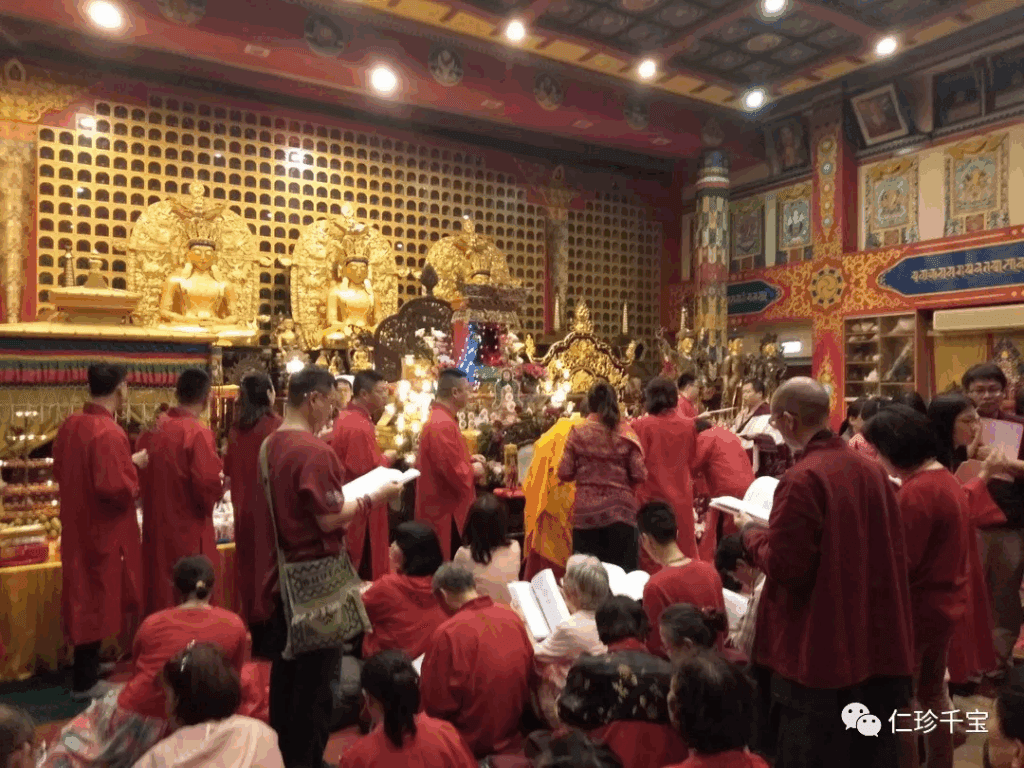
The red Kurukulla statue we are offering today was made for him when he was in retreat at Luojia Cave in Gansu. We originally planned to send it there, but he said not to send it yet, and that it would be fine with us. So we didn’t send it, and he eventually passed away. Some mantras he personally wrote, relics, and Kurukulla nectar pills he recited one hundred million times are all contained inside this statue. Also, the Kurukulla pendants you see some people wearing are made from nectar pills he recited the Kurukulla mantra one hundred million times, along with his ashes and relics. We made a thousand of these in Thailand, but they are all gone now. The nectar pills he recited the Kurukulla mantra one hundred million times were given to everyone who attended the ceremony, and they have all gone light now, but we still have the ones made from the original medicine.
I have offered several Kurukulla statues for him. The first one is made of coral, commissioned by disciples in Taiwan. The second is a bronze statue made by the best Nepalese craftsman, Sidraza. The standing Tara statue we are making today was also made by him. I didn’t have much money, so he always gave me very cheap prices, for which I was very grateful. Many of his Buddha statues were incredibly expensive, beyond our reach. Each statue he made was sold before it was even finished. He worked very slowly because he was old, in his seventies or eighties. Buddhists from all over the world commissioned him to make Buddha statues; many of the best Buddha statues in Nepal today are either made from his original molds or are imitations.
I even commissioned him to make a small bronze statue of Kurukulla (the Mother of Wisdom) to offer to Langga Rinpoche. Many disciples from Taiwan and Singapore also donated Kurukulla statues to him, so Langga Rinpoche has many Kurukulla statues. He himself is also very fond of art and can paint. He is very generous; many of the Buddha statues in his home have been donated to other temples. When I last visited his shrine, only the coral statue was still there; the others were gone.