Kurukulla Empowerment and Vase Practice – First Session, Singapore, September 10, 2025
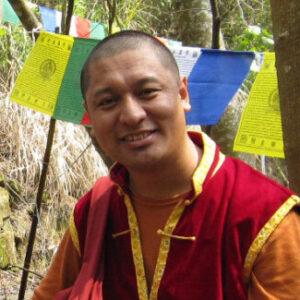
噶陀仁珍千宝仁波切 2025-09-27
Before each practice session, everyone should first purify their mind and body. Only with a pure mind and body can our blessings have power, our vows be firm, and our practice be effective. It’s normal that we ordinary people find it difficult to maintain purity in our daily lives. Although we try our best, because our wisdom is not yet perfected and our meditative concentration is insufficient, we often find ourselves lacking the strength to achieve our goals. We have many wishes, but few are fulfilled.
However, whether in group practice, retreat, or daily practice, even if it’s just for a short one or two hours, as long as we can focus and concentrate our minds, maintaining mindfulness and purity during that time, it is already very commendable.
Practicing Dharma is not just about chanting mantras and performing rituals; more importantly, it’s about adjusting one’s mind. Before each practice session or class, I remind everyone to relax and calm their mind and body. Many people hurriedly recite rituals or prayers, which is also virtuous, and having this faith is already very good—in this degenerate age, generating a virtuous thought is not easy. But we can do better: by adjusting our mind and body before practicing Dharma.
When the body and mind are pure, it is easier to resonate with the Buddhas and Bodhisattvas; when the body and mind are chaotic, resonance is difficult. Therefore, the body should be relaxed, and breathing should be natural. Most of us are usually in a state of tension, with stagnant blood and qi, making it difficult for the mind to calm down. The Diamond Sutra also emphasizes returning the body to a natural and stable state; when blood and qi flow smoothly, the mind can easily quiet down.
Specifically, you can do this: Choose a sitting posture that you find most comfortable, either full lotus or half lotus, with your spine slightly straight. Then, from head to toe, use your mind to guide each part to relax—from your eyes, neck, and shoulders down to the soles of your feet; then relax back up from the soles of your feet to the top of your head. Repeat this several times until your body truly relaxes.
Adjust your breathing to a gentle and natural state, avoiding rushing or holding your breath. Imagine yourself letting go of a heavy burden, completing a great task, feeling peaceful and at ease. It is easier to enter a meditative state when sitting or practicing in this state.
After relaxing the body and mind, we need to adjust our views and motivation. The so-called “right view” is virtuous thought, especially the vast Bodhicitta (the aspiration for enlightenment for all sentient beings). We should contemplate the suffering of all beings, aspire to liberate all beings from suffering and lead them to happiness, ultimately attaining Buddhahood. Practicing with this mindset constitutes right view.
Bodhicitta is right view, and faith in the Three Jewels is right view. Before practicing, one should recall the virtues of the Buddha, Dharma, and Sangha, especially the virtues of the deity—such as Tara or Vajrayogini. Through recall and faith, the power of virtuous thoughts in the heart is strengthened, just as sunlight dispels darkness; when virtuous thoughts are strong, evil thoughts naturally do not arise.
Although Vajrayana emphasizes that “all practices are for the benefit of sentient beings,” if we only remain at the conceptual level without truly generating experience, we can begin by visualizing those around us: practicing and dedicating the merit to family members, ancestors, karmic creditors, and even all unseen beings. For example, in this Vase Practice, we specifically pray for the Naga (dragons) and unseen beings, wishing them benefit.
One of the characteristics of Vajrayana practice is visualization. We should visualize our chosen deity—such as Tara—clearly and solemnly abiding in a pure land; we ourselves and all sentient beings also appear as the form of the deity. While reciting the mantra, visualize the pure sound of the mantra, with nectar-like light flowing from the bodies of Buddhas and Bodhisattvas, bathing us and all sentient beings, filling our body and mind with joy. Within this joy, abide in the view of emptiness, without clinging to the blissful feeling, entering the realization of “bliss and emptiness being inseparable.”
Practicing in this state, even for only half an hour or an hour, our mind merges with that of all Buddhas and Bodhisattvas, and we ourselves become a mandala of wisdom. At this time, whatever we do will possess a pure power. Even illness can be transformed into a path; even facing death, through the power of mindfulness, we can attain liberation in the intermediate state (bardo). Our practice is the same; when confused and overwhelmed by afflictions, we remember our guru and the deity, loudly reciting mantras and chanting, allowing our mind to return to purity.
This is our third time practicing the Vase Practice. Previously, when we practiced in Malaysia, there was a long drought, and after the practice, it rained heavily, bringing great joy to everyone. This time, we will practice together in a simplified manner. Although the time is short, the content is complete. We hope everyone will practice with a sincere heart, and that this merit will benefit countless sentient beings, especially the dragon race and unseen beings.
Let us generate this aspiration together and practice the Dharma together. May all sentient beings be free from suffering and attain happiness, and quickly realize enlightenment.