Doma
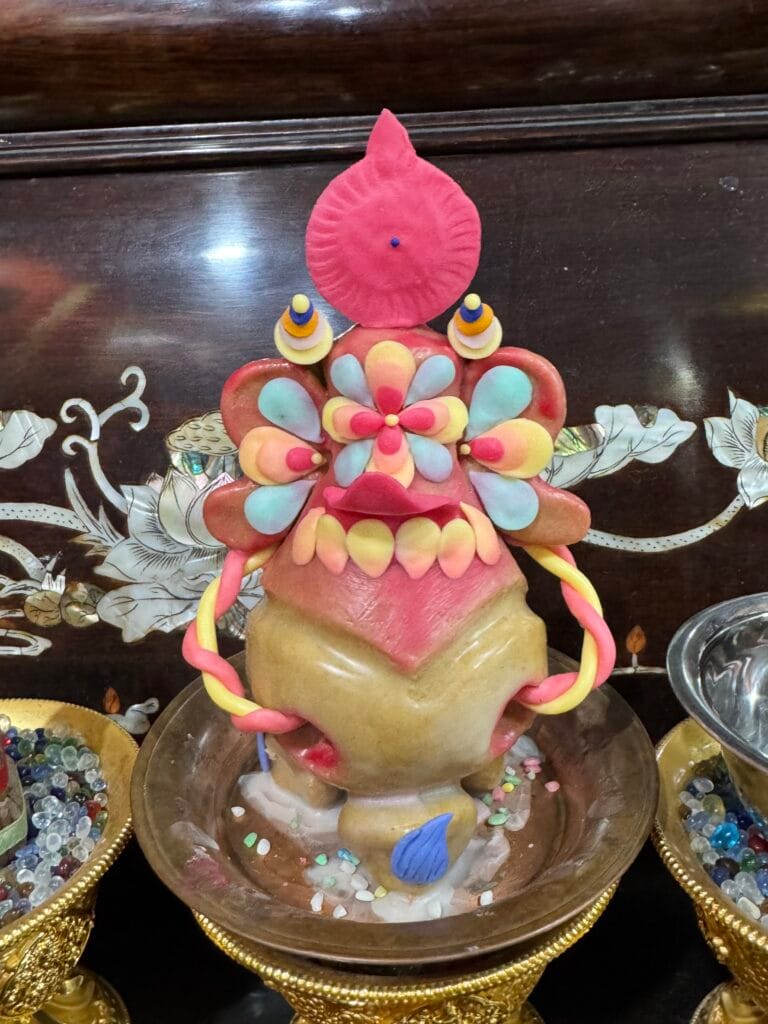
Dorma (Tibetan: གཏོར་མ།), also known as food, Dorma, Dorma, and sacrificial food, is a kind of dough food made of tsampa or cooked wheat flour and butter in Tibetan Buddhism, used to offer food to Buddha, Bodhisattva, deity or gods, or to feed ghosts. They are dyed in different colors, but the main body is generally white or red. They can be made into different shapes according to different uses, usually in a cone shape. Although Dorma is generally small and can be placed directly on a shrine or tray, large Dorma are also made during grand festivals. Its raw materials are mainly three white and three sweet (milk, cheese, ghee, rock sugar, honey). There will be slight changes in raw materials depending on different regions. For example, the ball-shaped food offered to gods in India should be the prototype of Dolma. Offerings to the main deities of the Care
The clothes of the Buddha and Bodhisattva are solemn
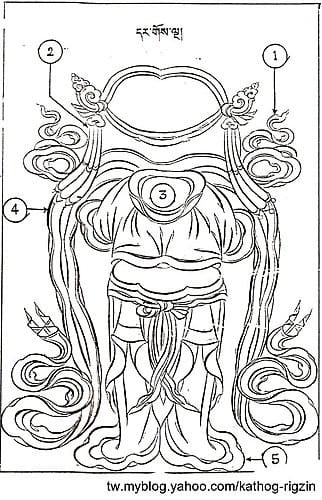
Tibetan Buddhism’s prudence and rigor on the inheritance of the Dharma are evident from the translation of the Tibetan scriptures, the academy system, and the practice of rituals. “The Thirteen Solemnities of the Buddha” It is divided into five satin robes and eight treasures [1] Silk satin five vestments 1. A streamer hanging behind a blue satin crown2. The crown hanging under the crown of the Buddha of the five directions3. White satin shoulder drapery with gold patterns(If you want to fully follow the rules for painting thangkas, you should draw an ornament called yin and yang mantle (armpit) from the armpit of the left shoulder to the armpit of the right shoulder.)4. From the cuffs of the jacket to the palms, the green satin draped down5. Inner skirts that cover the lower body, as well as various other lower skirts(According to the common Buddha painting method, the skirt is
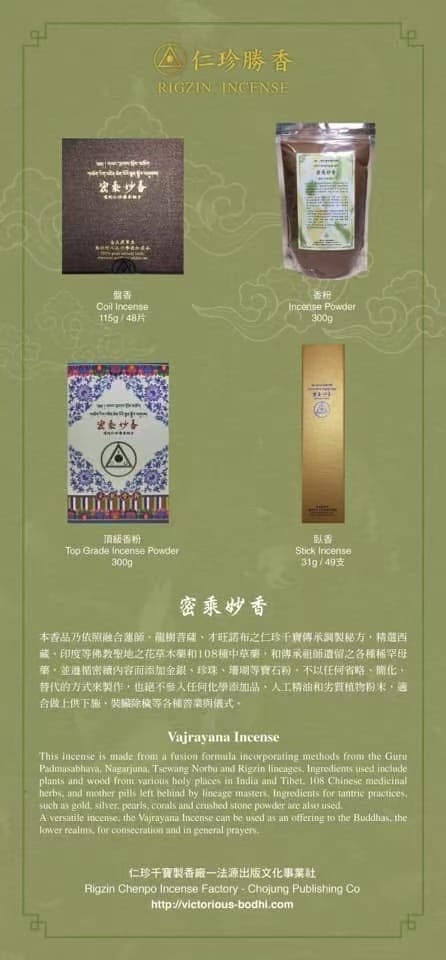
Vajrayana Incense
This incense is made from a fusion formula incorporating methods from the Guru Padmasabhava, Nagarjuna, Tsewang Norbu and Rigzin lineages. Ingredients used include plants and wood from various holy places in India and Tibet, 108 Chinese medicinal herbs, and mother pills left behind by lineage masters. Ingredients for tantric practices, such as gold, silver, pearls, corals and crushed stone powder are also used.A versatile incense, the Vajrayana Incense can be used as an offering to the Buddhas, the lower realms, for consecration and in general prayers.
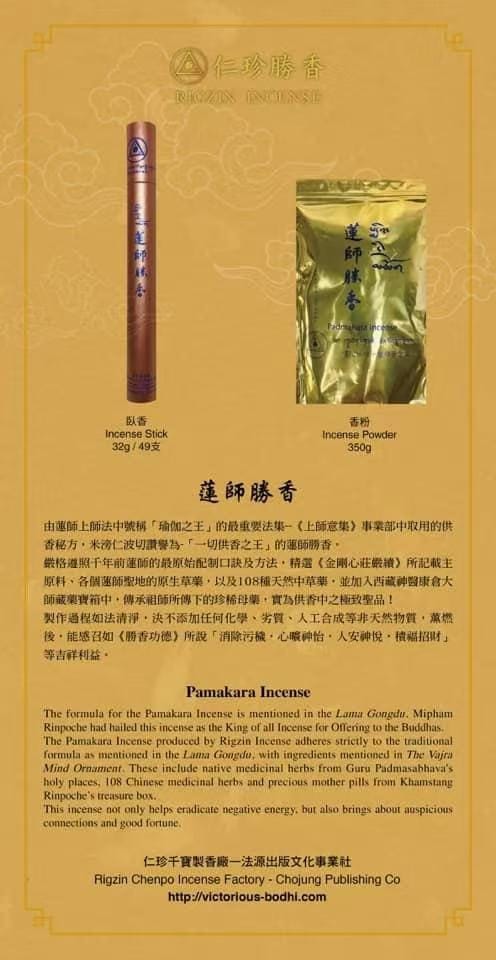
Pamakara lncense
The formula for the Pamakara Incense is mentioned in the Lama Gongdu. Mipham Rinpoche had hailed this incense as the King of all Incense for Offering to the Buddhas. The Pamakara Incense produced by Rigzin Incense adheres strictly to the traditional formula as mentioned in the Lama Gongdu, with ingredients mentioned in The Vajra Mind Ornament. These include native medicinal herbs from Guru Padmasabhava’s holy places, 108 Chinese medicinal herbs and precious mother pills from Khamstang Rinpoche’s treasure box. This incense not only helps eradicate negative energy, but also brings about auspicious connections and good fortune.
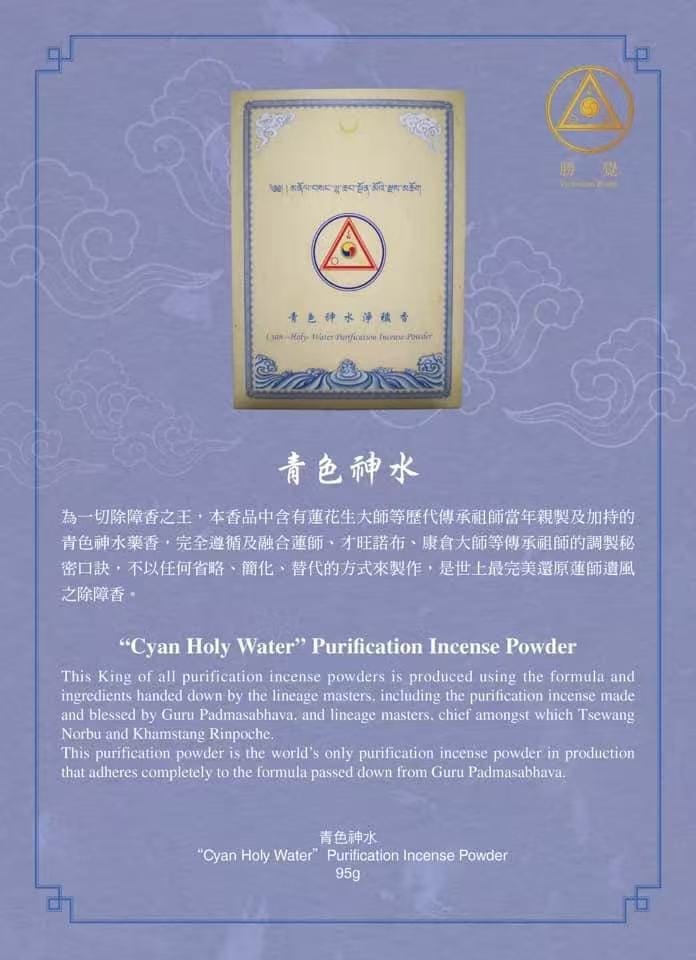
“Cyan Holy Water” Purification Incense Powder
This King of all purification incense powders is produced using the formula and ingredients handed down by the lineage masters, including the purification incense made and blessed by Guru Padmasabhava, and lineage masters, chief amongst which Tsewang Norbu and Khamstang Rinpoche.This purification powder is the world’s only purification incense powder in production that adheres completely to the formula passed down from Guru Padmasabhava.