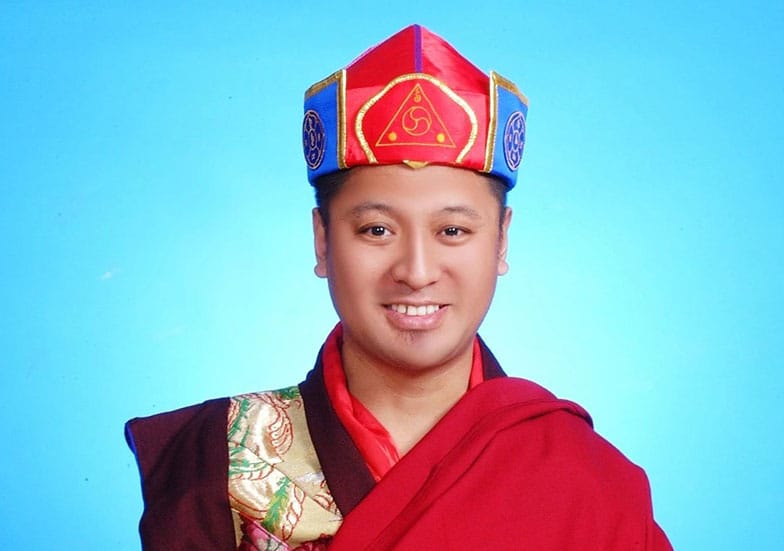
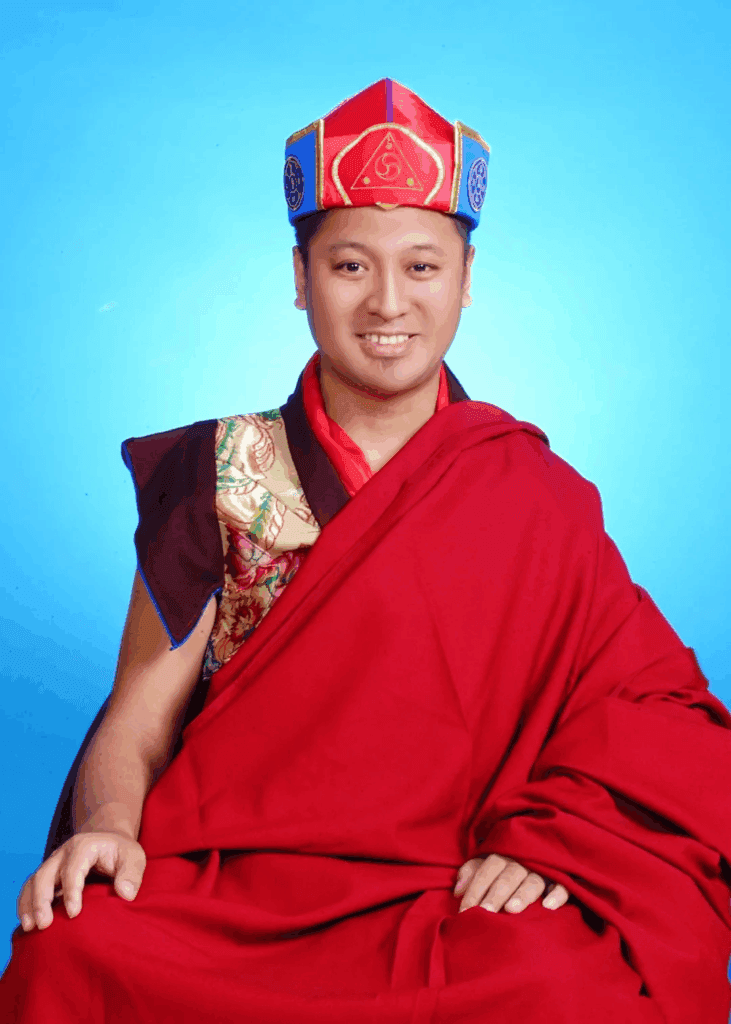
Introduction to the inheritance of Renzhen Qianbao: Guru Bao’s birthday album

1. Brief description of the holders of the inheritance of Renzhen Thousand Treasures and the establishment of the sect
Although he has seen the teachings of the Buddha and his masters countless times in meditation or in dreams, he mentioned in his biography: “If there is a “human” inheritance of my inheritance and the method of receiving my inheritance, I will choose to focus on the “human” inheritance. ”
2. The inheritance of benevolence and treasures is the basis of the sect
1. Viewing part:
(1) Inheritance of scriptures:
It is based on the view of the air of the Juenang sect;
(2) Tantra:
It is based on the Dzogchen Dharma of the Nyingma Balungchen lineage, and the Mahamudra lineage is Shambha, Bamba and Karma Kagyu;
(3) Denomination:
It is the lineage of Guru Padmasambhava, the Venerable Unsullied Light (i.e. Venerable Lungchenpa) and the Silent Tibetan (15th-century Indian master, the guru of Master Doronata, and the guru of Master Buddha).
No denominational:
He has a pure mind for all sects, and regards Padmasambhava as a guru for life.
Therefore, the prayer for the inheritance of Renzhen Thousand Treasures written by Chengli Tunzhu Rinpoche is:
The Supreme Vision of the Ultimate Contemplation of Otherness
It is very deep and convenient to do Mahamudra
Merge into the Ultimate Bright Great Perfection
May the teachings of the Victorious Great Vidyadhara (Rigzin Chenpo) flourish
2. The main basis for the revision of the law and rituals:
There are three types of Tibetan methods of Katuo Renzhen Qianbao II Caiwang Nobu itself, Bemad Chinlinpa, and Jiacun Ningbo Tibetan method.
(1) Guru Method:
the Lord relies on the Silent Lotus Master, the thirteen deities of the Lotus Master, etc.;
(2) The Buddha’s Method:
The Lord relies on the Eight Great Heluga, Pupa Vajra and the True Meaning Heluga, the Five Stages of Vajrasattva, the Lotus Master of Wrath, the Hundred Honors of Civil and Martial Arts, etc.;
(3) Blank Line:
the Buddha Mother of Wisdom, the Tara of All Achievements (Standing), the White-faced Tara, the Red Tara, etc.;
(4) Dharma Protector Part:
He then killed the nine-faced and twelve-armed Rahula, the nine-faced and eighteen-armed one-haired Buddha Mother, and the Vajra and Zima who were born into the Dharma.
Some of the major methods of the Juenang Paise Monastery in Aba County, such as Shengle and Kalachakra, most of the methods of Shambha Kagyu, most of the Mahakala lineage of the Kagyu school, and the complete lineage of Doranatha that still exist are continued and passed down by Tsaiwang Nobu.
3. The inheritance of benevolence and treasures and the general situation of dissemination
1. The founding ancestor Renzhen Cai Wangnuobu has three special advantages in his inheritance:
(1) The same method is obtained under many different gurus.
(2) In meditation or in dreams, I have seen the direct empowerment and transmission of the Dharma by the ancestor many times.
(3) In the meditation of practicing the Buddha, I saw the Buddha give empowerment and transmission again.
This inheritance is a lineage that integrates distant transmission, near transmission, and pure transmission.
2. Renzhen Qianbao inheritance circulation:
(1) According to the complete works of Cai Wangnuob, its inheritance circulation is divided into three parts: the upper Weizang and the lower Kang area, the Amdo region, and the southern inheritance.
(2) The inheritance of history, literature, and letters is only owned by the upper lineage, while the Kham area, Amdo, and southern traditions only have the part of Buddhist practice.
The Jaka Monastery, the Tara Monastery, and the Yang Liexiu Monastery in Nepal (in the summer of 1993, Rinpoche instructed that this lineage must be widely spread and disseminated, so he personally led the people to welcome the upper lineage of Kumi Rinpoche of the Zaka Monastery, the upper lineage of Caiwang Nobu).
The Zama Monastery in Xikang, the Mula Monastery in Gansu, the Eight Stick Monastery and the Se Temple of the New Translation School in Sichuan, the Regong Mantra Monastery in Qinghai, the Bangba Mountain Monastery in Jilong, Tibet, and the temples in the Menba and Luopa areas all have some of the above two traditions.
Others, such as Zhupa Kagyu and Juenang Monastery, still practice the method of continuation of Renzhen Caiwang Nobu.
The inheritance of Renzhen Thousand Treasures mainly exists in the Juenang and Kagyu schools, and there is no method for cultivating the inheritance of Renzhen Thousand Treasures except for the “Introduction to the Emergence of the Three Treasures” in the thirteen major mantras.