Pilgrimage 2023 – Nepal’s Four Vajrayogini Shrine
In Kathmandu, Nepal, there are several important Neva-style temples dedicated to the very extraordinary Vajrayogini in different forms. These four Vajra Haimu holy places are ancient and historically significant, status, and most representative places, and they are also the places where the patriarchs have achieved great virtue in the past. It is also a sacred place for practicing motherhood.
The first Vajrayo Mother Holy Land is the Vajrayogini Holy Land of the Mediba (Michi) lineage, which is a sacred place for tantric practice, which is little known. The caretakers repeatedly confirmed that we were true Buddhists before letting us in. Many achievers have practiced in retreat here, such as Master Naropa, Master Tinova, etc…… Everyone bowed respectfully and reverently and bowed devoutly.
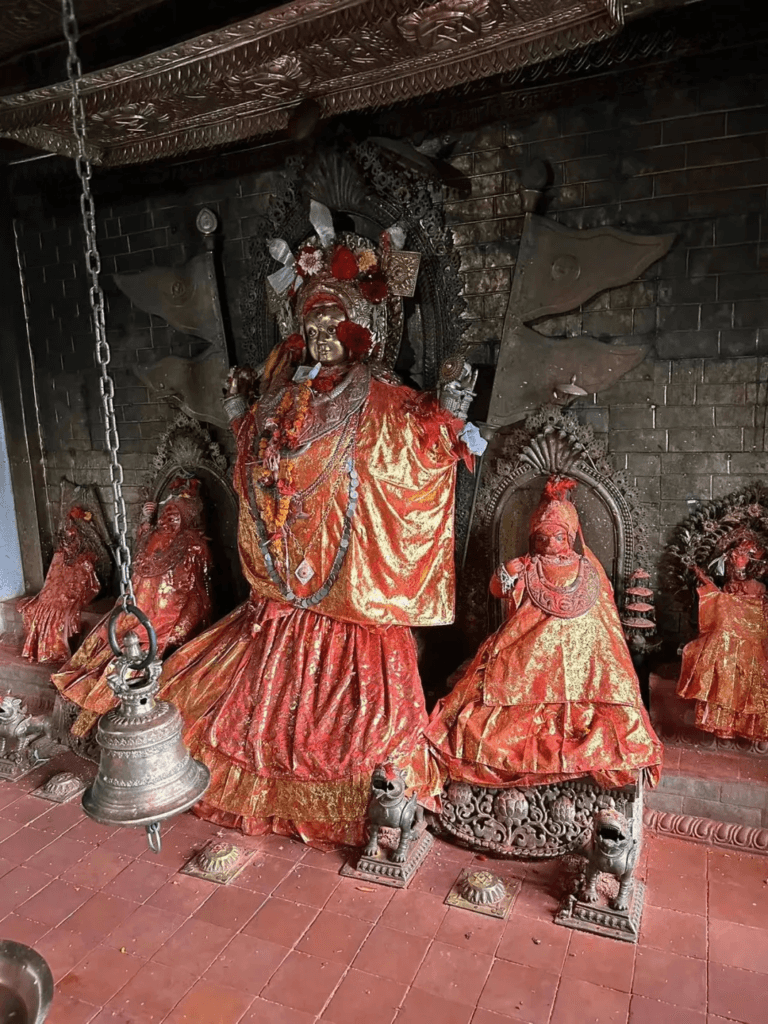
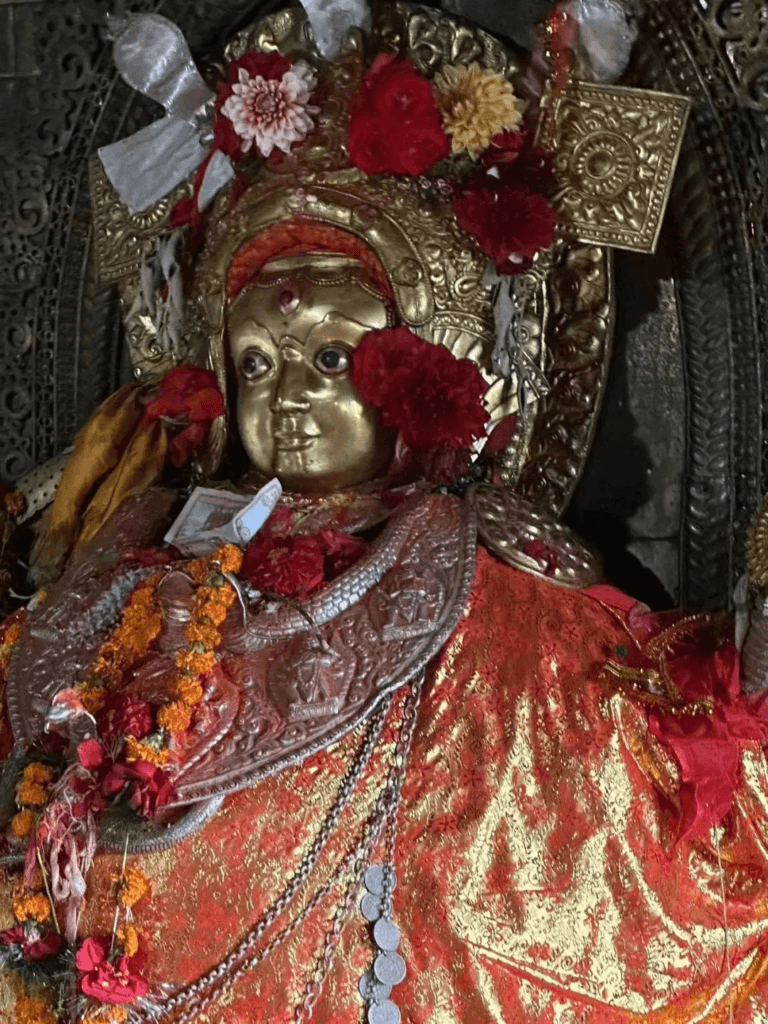
The stairs on the hill leading to the Monkey Temple will lead you to this temple, which is rarely visited by tourists, but a place of pilgrimage that Tibetan Buddhism must not miss. Located on the west bank of the Bishnumati River in Dhalko, Kathmandu, the monastery was built in 1655 AD and is also named after Vidheshvari Vidhya Yogini (Flying Vajrayogini), a shrine that is considered to be the gathering of five deities, but mainly the Meji empty deity.
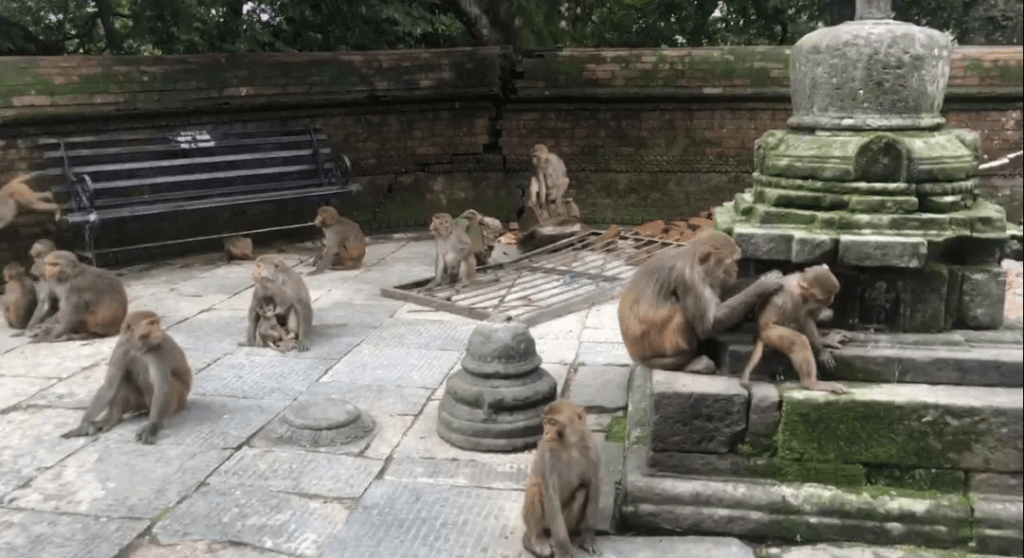
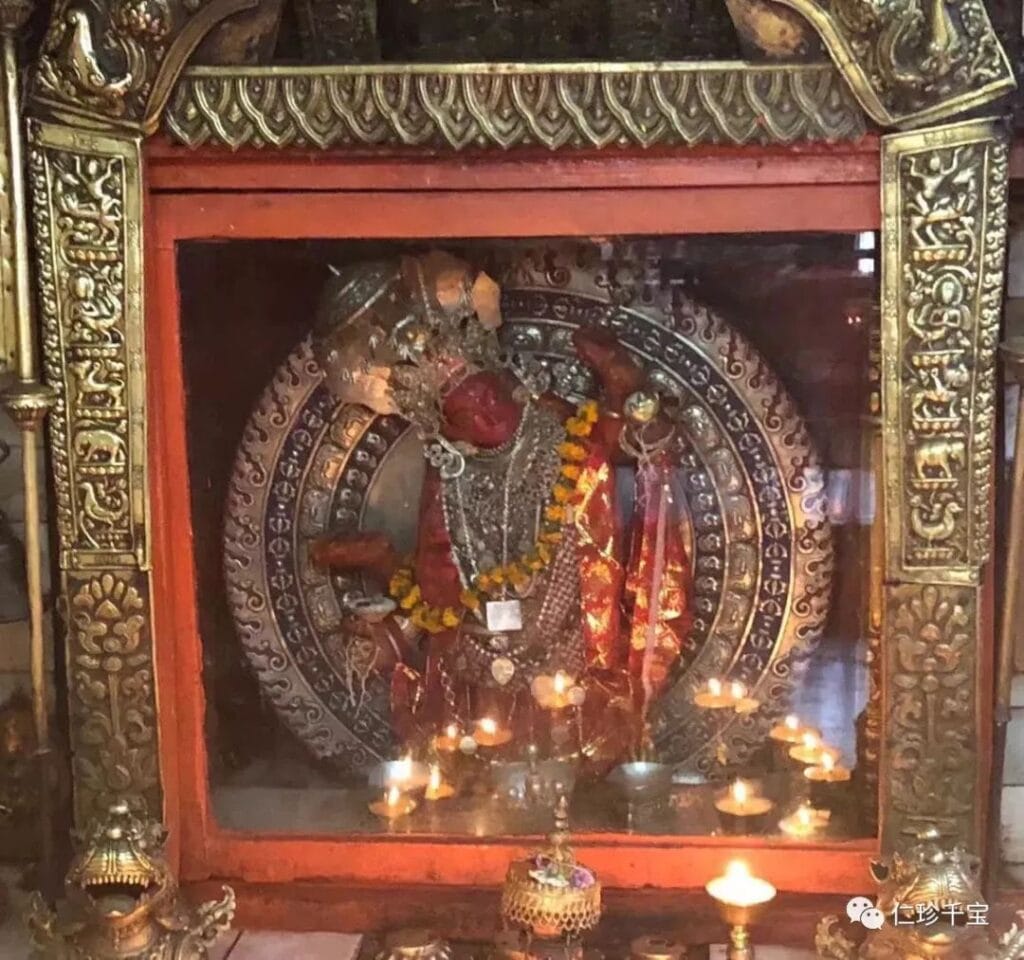
It is worth mentioning that it is the same as the one on the second floor of the Thousand Buddha Temple in Patan. Also called Flying Vajrayogini, most of the Niva-style thangkas are this yogi, with her right leg bent at the knee behind her, her left leg pulled to her chest with her left arm, and her right arm behind her, holding a vajra above the sole of her right foot.
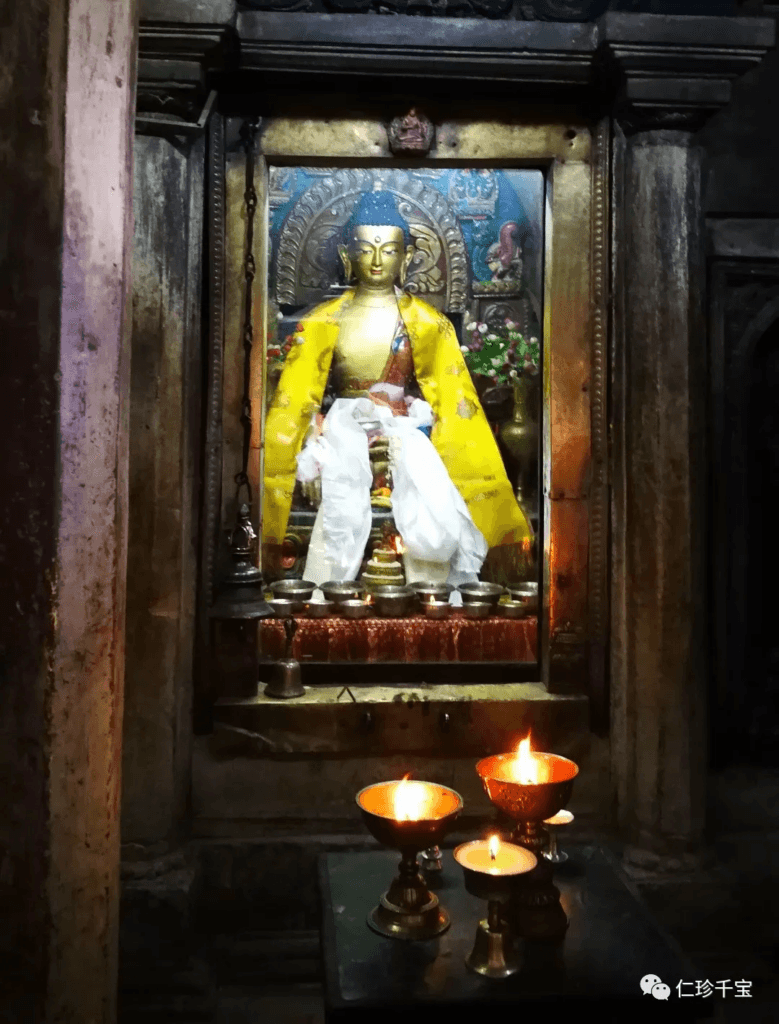
The second Vajra Mother Holy Land is on the second floor opposite the Thousand Buddha Pagoda, which is the Holy Land of Vajrayogini in Nzaputi, which is dedicated to the Vajrayogini in a flying posture, named the Good Karma Empty Woman.
Maha Pagoda, also known as Maha Buddha Temple, Dajue Temple, and Thousand Buddha Temple, is modeled after the early Great Enlightenment Pagoda in Bodh Gaya, India, because each tile is engraved with a Buddha statue, a total of 999 statues, and it is also known as the Thousand Buddha Pagoda, which is sometimes covered with a vajra.
Legend has it that a devout Buddha worshiper made a pilgrimage to India and vowed to build a stupa in his hometown. Finally, with the support of the king, after three generations of hard work, it took a total of 36 years to complete it 1300 years ago. The main tower is 30 meters high, the base is 5 meters high, and it is divided into 5 floors. The whole tower is crimson, with a small tower at each corner, and the whole tower is made of bricks, sharing 9,000 giant pottery bricks. There is a Buddha statue of Shakyamuni on each brick, which can be called a masterpiece of Nepalese pottery craftsmanship. The hollow stupa is dedicated to the Buddha statue of Shakyamuni, about 2 meters high, and there is a Buddha table in front of the pagoda.
The third Vajra Mother Holy Land is the Holy Land of Vajrayogini in Pontimpa , where Master Naropa once secretly transmitted the Naloka Sparrow Empty Practice Method, and it is also the place where the Dakini appears.
This holy place is the monastery of the family of Master Pontimpa, who is the nephew of Naropa and his retinue. The master translators of the early translation tantras lived here. Guru Bao also practiced and retreated here.
The inheritance of the Dakini practice method is divided into distant and near-transmission. It was transmitted from afar to Vajrayogini (all sources of transmission of tantra) to Vajrayogini, who in turn passed on to Naropa, the great achiever of India. Naropa passed on Vajrayogini’s method to his two disciples at that time, the Pontimpa brothers. One of the disciples obtained the achievement of empty practice here, and the other went to Luojiadong in Lanzhou, Gansu Province according to Naropa’s prophecy. It is also because of this that the Han people can easily achieve this inheritance.
There are three empty lines in the thirteen golden laws of Sakya, and the inheritance of Naropa in the three empty lines is here. Naluo Kongxing is also the most important red practice among the thirteen golden methods of the Sakya school, which was later transmitted from Sakya to the Gelug school and became the main practice method of many gurus.
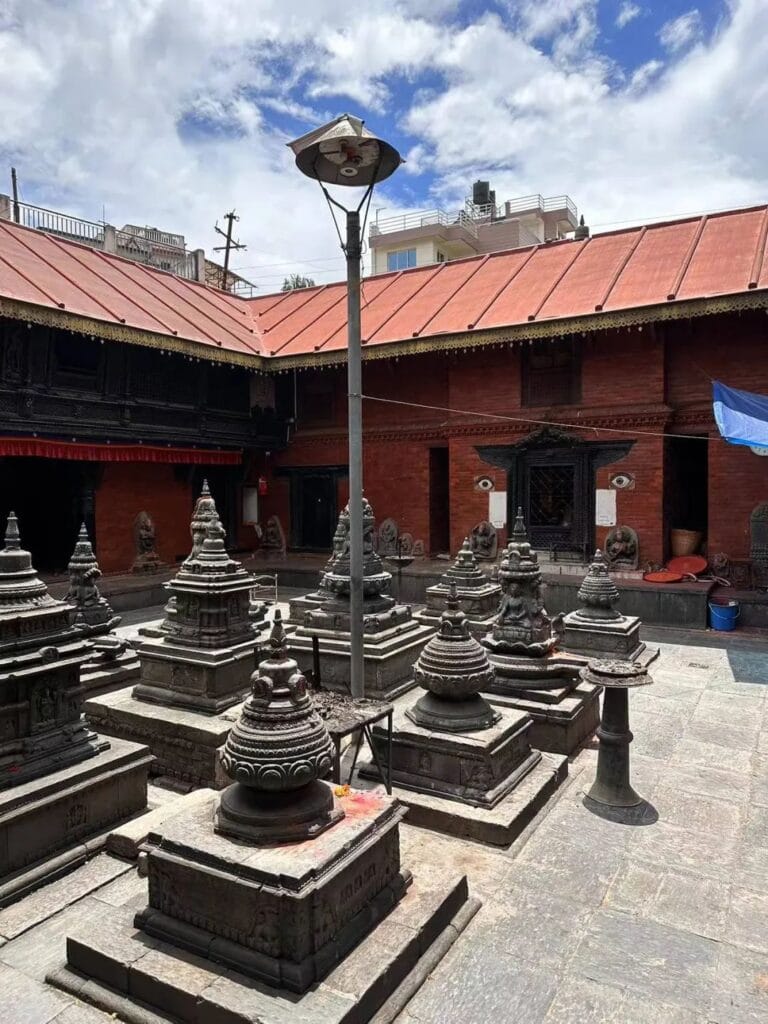
The fourth Vajra Haimu Holy Land is in Sanggu. Sanggu is a famous ancient city, not only because it was the hometown of the princess of Nepal’s Golden City during the Lotus Master era, but also because it was once a merciful king, and was admired and remembered by future generations.
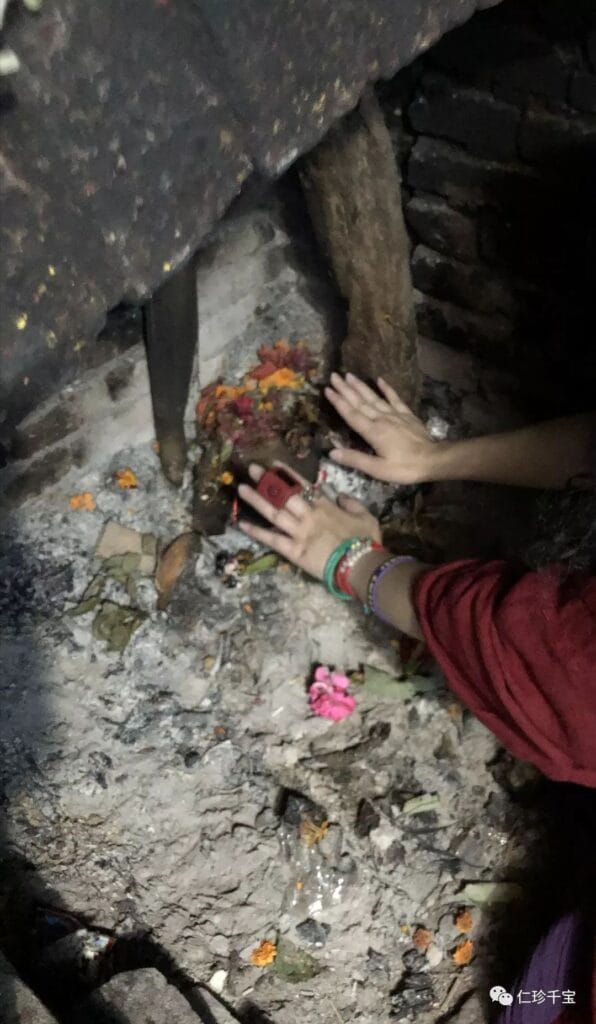
Next to Vajrayogini is a thousand-year-old tribulation. This fire has not been extinguished for thousands of years, symbolizing the power of Vajrayogini and the eternal residence of Buddhism.
Legend has it that in the past, there was a serious plague here due to the damage of the dragon king, and it could only be exchanged with the king’s body. In order to save the people, the king said to his son: “If a man kneels by the fishing pond today, dressed in white, you must cut off his head in exchange for the health of the people.” The son obeyed his commands, and when he cut off the head of the man in white, he found that it was his father.
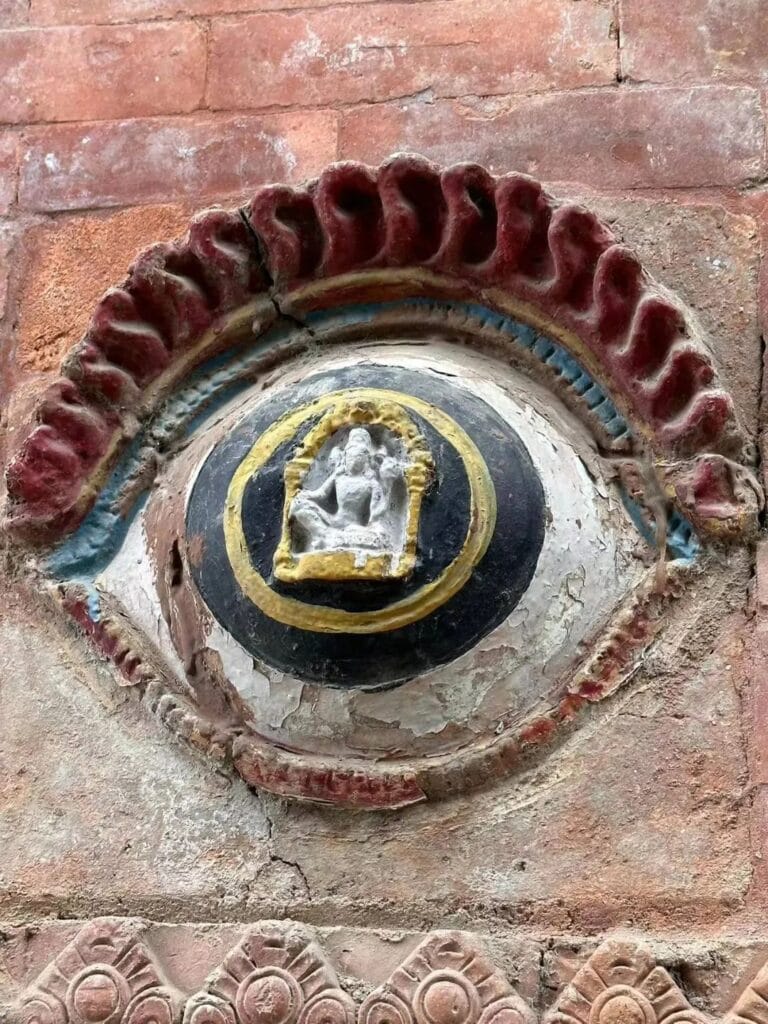
There is another theory that when the Indian dynasty ruled this area, in order to avoid war, the king voluntarily sacrificed himself and cut off his own head, the only condition was to protect the faith and life of the people.
The four-armed Vajra Hai Mother enshrined in the Sanggu Holy Land is the same as the four-armed Secret Wisdom Buddha Mother inherited by Renzhen. This statue is also known as: “Atisha Vajra Hai Mu”. According to legend, when Venerable Atisha was old and had to go from India to Tibet to preach the Dharma, when he passed by Sanggu, the Vajra Mother with a sword, he asked, “Is anyone willing to go with me, an old man?” The hand of the Vajra Mother icon raised and said, “I will go with you”, so it is called Atisha Vajra Mother.
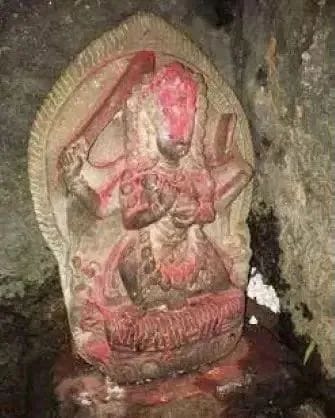
The locals who accompanied us told us that thirty years ago, someone stole this four-armed Vajra Haimu and died after being struck by lightning not far away. The Vajra Haimu was lost and recovered, and it has also become a necessary place for esoteric practitioners to make pilgrimages. Guru Bao led the disciples to practice the Dharma and make offerings here, and there were many signs on the day, so that the disciples could have confidence.
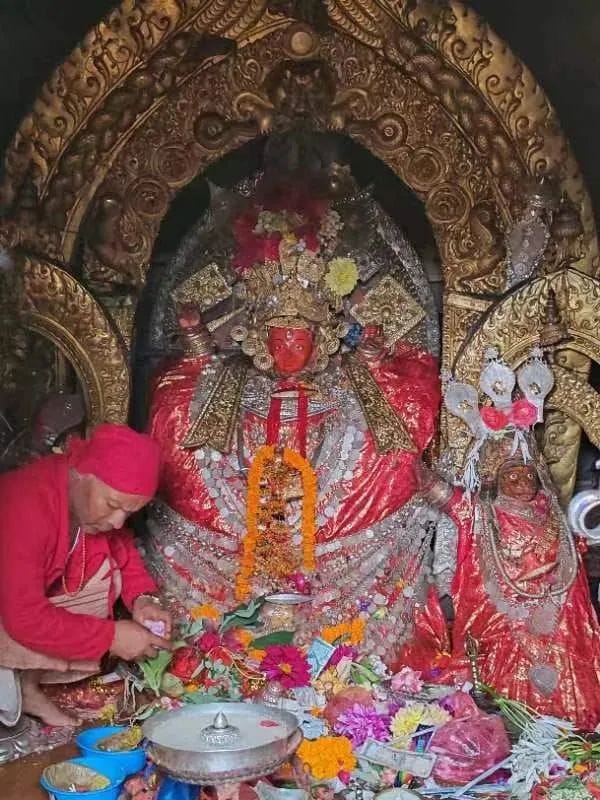
Next to the Vajra Mother is the “Spontaneous Pagoda Hall”, because the pagoda grows naturally, the original covered pagoda body is broken. It is said that the bones of Shakyamuni Buddha who sacrificed himself to feed the tiger in his previous life were partly offered in the sacrifice to feed the tiger pagoda, and part of it was offered here; It is also said that the self-generated pagoda in the monkey temple we went to before is this. Above the door are various Manjushri images in the “Manjushri True Name Sutra”.
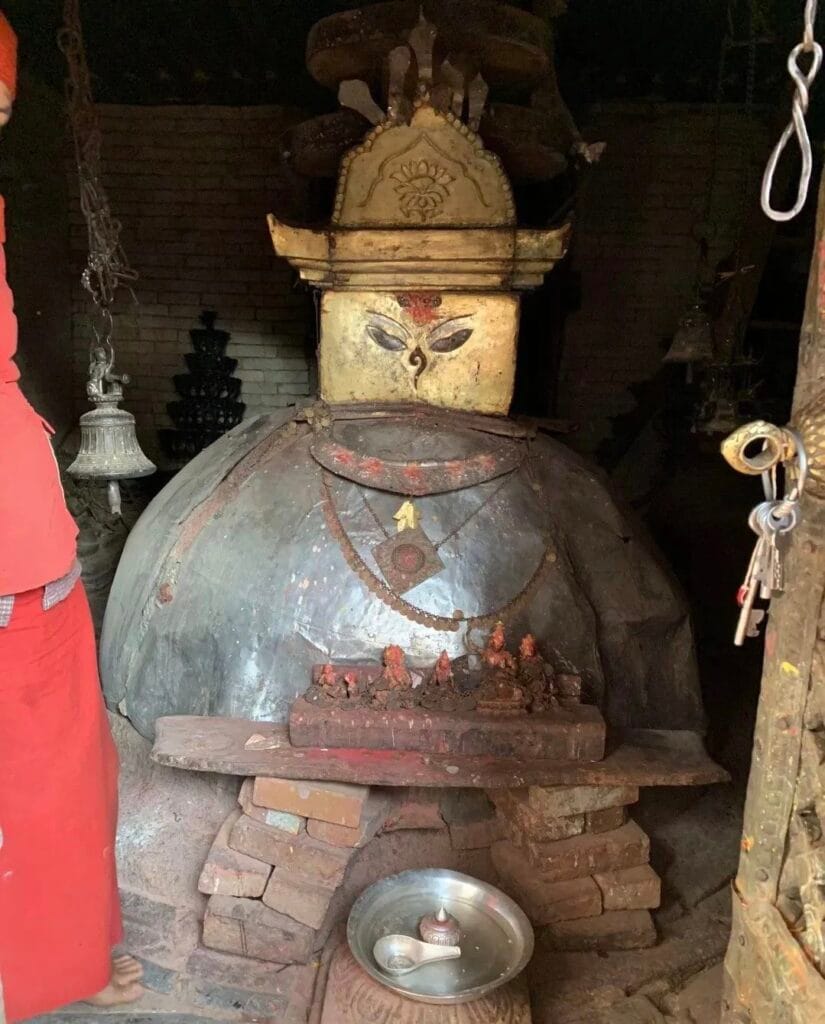
There is a cave to the left of Sangu Vajra Haimu, which has now been sealed off because of the damage caused by the 2015 Nepal earthquake.
This now-seemingly inconspicuous cave is an extremely important place in history, and it is also recorded in the biography of Nalopa, Tilopa, and Marpa who practiced Vajra Haimu in retreat in this cave, and this is the place where Tibetan pilgrims must go in the past. Guru Bao also had a retreat here 26 years ago.
In the first summer vacation after the epidemic was fully opened, the Nepal pilgrimage group was full in June and August, and the initiates who still wanted to go were welcome to leave a message in the background, and it is expected that they will gather in Nepal again on the National Day in October!