
The ninth and tenth figures of the “Four Medical Dictionaries” Mantang: Human skeleton
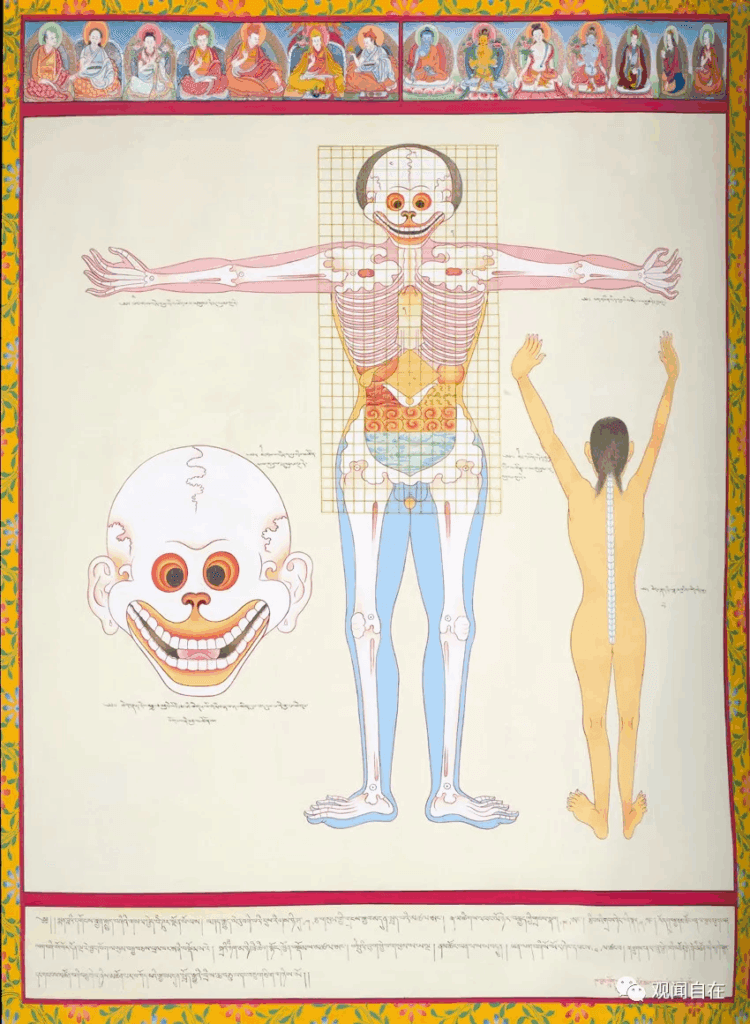
Figure 9 Human skeleton (front)
(1) This diagram is based on the content of Chapter 4 of the “Four Medical Classics and Discourses” about bones and organs.
(2) Human bones are divided into 23 types, and there are 360 bones in the whole body.
(3) The whole body has a total of 28 vertebrae; 24 ribs ; Thirty-two teeth ; 20,000 hairs.
(4) There are 35 million sweat pores in the whole body. Among them, there are 7 million above the thoracic vertebrae, 4 million in the body cavity, and 3.5 million in each limb.
(5) There are 900 tendons in the whole body. Among them, there are 300 roots above the thoracic vertebrae, 75 branches in the body cavity, and 75 branches in each limb.
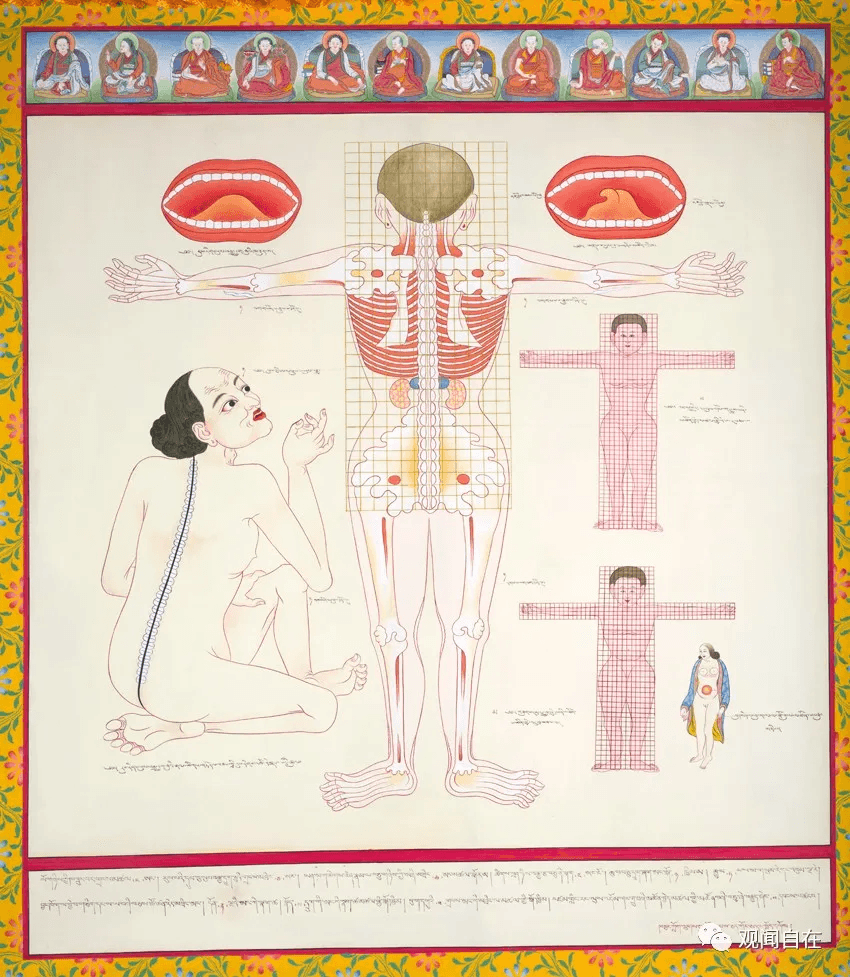
Figure 10 Human skeleton ( Back )
(1) This diagram is drawn based on the content of Chapter 4 of the “Four Medical Classics and Discourses” about bones and organs.
(2) There are twelve large joints and 210 small joints in the whole body.
(3) The five organs include the heart, lungs, liver, spleen, kidneys, and the six organs include the stomach, small intestine, gallbladder, bladder, seminal vesicles, and intestines.
(4) The nine orifices include both ears, eyes, both nostrils, mouth, anus, and urethra. Women also have two other orifices: the birth gate and the nipple.
5) The height of a person should be equal to the length of the arms outstretched, which is equivalent to four cubits. If the height is less than three and a half cubits, it is a short person.