Yutuo transmits the rules of the Medicine Buddha before the empowerment
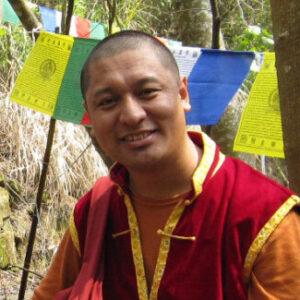
噶陀仁珍千宝仁波切 2025-05-27
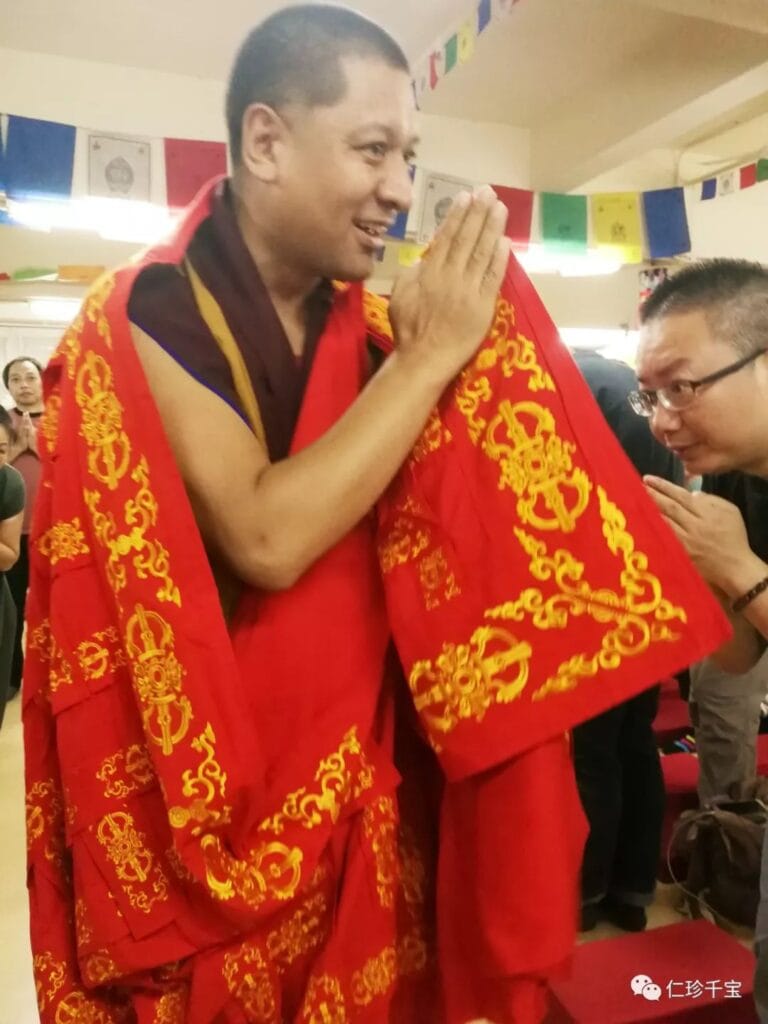
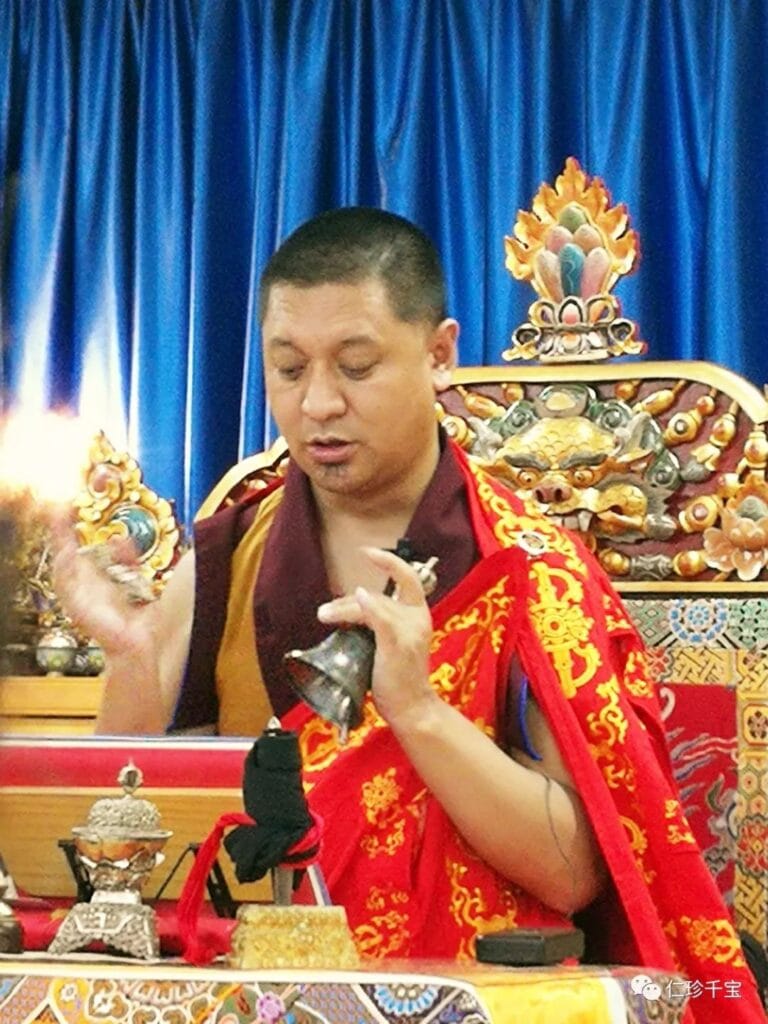
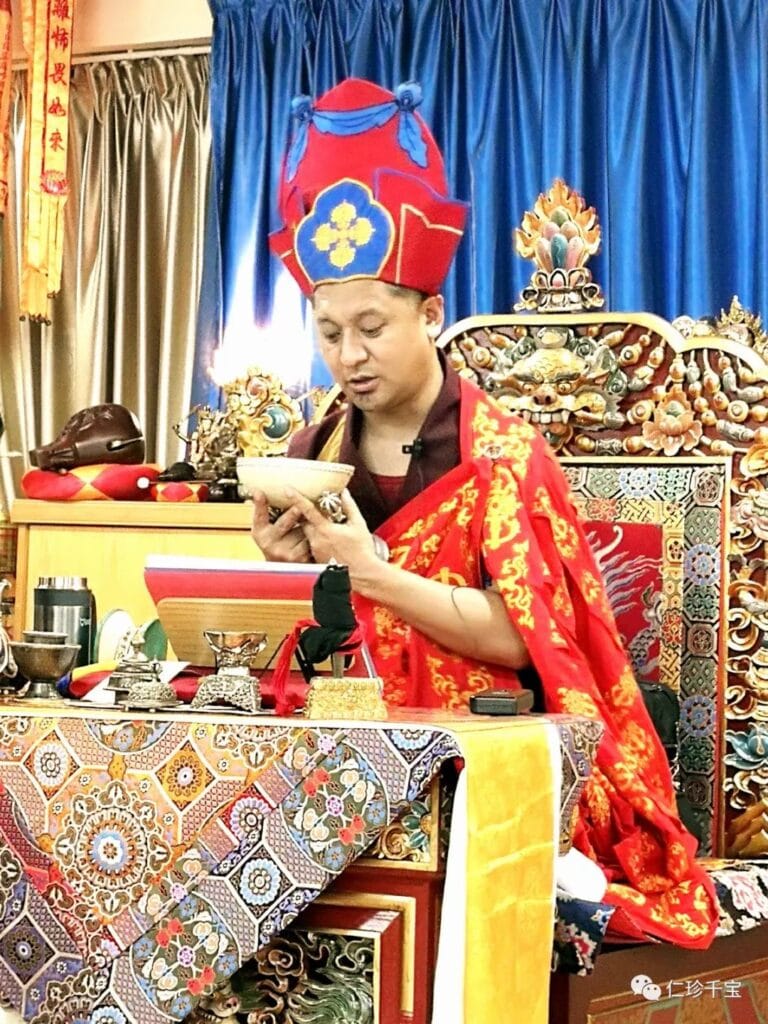
On May 29, 2019, he gave the empowerment of Medicine Buddha at the Hong Kong Life Ashram
Medicine Buddha has an image of retribution, an incarnation, a method of affairs, and a method of supreme tantra. Most of the Medicine Buddha empowerments belong to the ministry method, and the ministry must be vegetarian when practicing. In addition, no matter where you live, you must wear clean clothes and observe the eight fasts. The practice of Medicine Buddha in the Supreme Tantra is not so strict, and the strict places are mainly the precepts of meditation and mantras, such as the observance of the eight precepts and so on.
In Tibetan Buddhism, the lineage of Medicine Buddha is divided into three types: the lineage of the old translation school, the lineage of the Xinze school, and the lineage of the hidden Buddha. The Old School of Translation is a distant transmission from the 7th to 8th centuries AD, and was handed down from the time of Guru Rinpoche. The lineage of the New School of Translation is a modern lineage, which was handed down by Atisha.
** **
Features of the Dharma:
1. Today’s Yutuo Medicine Master Dharma Gate is a Tibetan lineage separated from the Far Spread Method, which was taken out by the Master of Fuzang from different time periods, and has not been interrupted from the seventh century to the present;
2: It is the image of Medicine Buddha, surrounded by four goddesses, which belong to the supreme tantric empowerment, and is the highest and highest empowerment of Medicine Buddha.
Three: It is a method that must be practiced by those who have been doctors in Tibetan Buddhism throughout the ages, and all pills must be blessed by practicing the rituals of this method;
Four: It is a method that combines the Guru corresponding method of Master Utuo and the practice of Medicine Buddha.
The root method of Medicine Buddha is divided into an empowerment part, a sadhana part, and an explanation part. Empowerments are divided into four categories: Guru, Buddha-figure, Empty Walk, and Dharma Protector, of which Guru is divided into Outer, Inner, and Tantra; The deity is divided into the deity Medicine Buddha and the deity Matou Ming King; The empty rows are divided into Vajrayogini, Gan Open Maiden (empowerment of nectar); The Dharma Protector is divided into the outer, inner, and secret empowerments of the Elixir Fairy, the Divine Power Child, the Immortal, and the Dragon Protector. The part of the explanation is divided into the part of the preliminaries of the four preliminaries, and the part of the generation stage and the stage of perfection, which in turn is divided into the part of the qi veins and veins of the stage of perfection, the stage of non-phase perfection, and the part of non-phase meditation. There are many types of sadhanas, such as long, medium, and short.
In the mid-to-late 19th century, when Jamyang Khyentse Wangpo and Jamgong Kangchu Lodrupaya were compiling the Great Treasure Hidden Treasure, they included Medicine Buddha Uto in the 28th letter, which is an independent and complete system that uses the joy of Dzogchen Anu Yoga to enter the light of the mind.
Dharma Traditions:
This lineage of Medicine Buddha has several names:
One: It is called the Medicine Buddha of Far Reach, also known as the Medicine Buddha of Yu Tuo Chuan Gui (Yu Tuo Ningti, Yu Tuo Xin, Yu Tuo Xinyao).
Yu Tuo is the name of a master in Tibet, and his medical skills are the same as Hua Tuo in Han China, and he was the former medical king of Tibet;
2. Known as the lineage of Sukalpa, Sukalpa is a very famous great master in Tibet;
Three: It is called the Rigong Chuangui, which is the lineage of the Drikung Kagyu.
Rigong Kagyu has a very famous great master called Rinzen Chokdra, he is the embodiment of Guru Rinpoche, has made great contributions to the lineage of Guru Rinpoche, he promotes the teachings of Guru Rinpoche, also promotes the teachings of the Kagyu school, is a great achiever of the practice of Manjushri Yama enemy, he is very respectful of the Medicine Buddha of the far tradition, so it is also called the Rigong Medicine Buddha.
My Uto Medicine Buddha lineage has been received under many lamas:
Legacy 1: I received most of the oral transmission of U Tuo Xin under the seat of my own teacher, Tu Dian Norbu, who is a doctor himself and has been studying Medicine Buddha for a long time.
Lineage 2: Received empowerment and lectures on the Eight Buddhas of Medicine and the Ear Transmission of the U Tho Heart under the seat of Guru Kangchang Fuzang.
Legacy 3: Received the empowerment of the Great Treasure under the throne of Benopha.
Legacy 4: Received empowerment and oral transmission under the seat of the Achiever Baiya Rinpoche.
Legacy 5: Under the seat of the imperial doctor, he received an oral transmission and explanation of Yu To’s heart.
He has also received more than 10 empowerments and oral transmissions, 4 lectures, and short-term retreats under many other lamas.
The lineage in Vajrayana is very important, the lineage is like a river, it flows down uninterruptedly, and to receive the lineage is to receive the blessings and blessings of all the lineage ancestors. Today you receive my empowerment and teachings, and I also bless you. We have a vast bodhichitta and hope that all sentient beings will be freed from the sea of suffering and attain nirvana. Visualize yourself living in the Pure Land of Medicine Buddha and receiving empowerment under the seat of Medicine Buddha, who also visualizes as Medicine Buddha. With such faith and pure mind, you will definitely be able to receive the blessings of Medicine Buddha and the blessings of all the lineage patriarchs.
Attached: Introduction of Medicine Buddha Achiever Yutuo Yundian Gongbo (based on network information)
Yutuo Yundian Gongbo is divided into former Yutuo Yundian Gongbo and later Yutuo Yundian Gongbo. Former Yutuo Yundian Gongbo was born in 729 A.D. in Qianzangduilong. Gena place. At the age of three, he learned to write and read with his father, listened to medical theory, and was able to cure diseases with quick understanding; At the age of five, he followed his father to receive Buddhist tantric rituals such as “sweet atomization medicine” and “Medicine Buddha practice”; At the age of 10, the Tibetan king Mei’a was hurriedly summoned to Samye to take the exam, and he won a complete victory in the debate with Chandi Denekapu and other famous Tibetan doctors, and became the first of the nine famous doctors in Tibet.
According to the statement and the reason for the reason, he answered all kinds of questions and difficulties from the nine distant doctors who were invited to Tibet, such as the Indian doctor Xingdi Kapa, the Chinese doctor Dongsonggangwa, etc. The Han and Tibetan masters unanimously admired it, and called the Medicine Buddha came to the world. He was the imperial physician of the two dynasties of Mei, Achao and Trisong Dezan.
Chandrobi and the famous doctor Meiwang were his teachers, and listened to many medical commentators such as “Four Continuations and Supplements: Pearl Mane” and “The Key Key to Knife and Needle”; Once I went to Wutai Mountain in the Han Dynasty and asked for the teachings of the Holy “Formula Treasure” and “Internal Medicine Juyi” from the Sage Manjushri.
It contributes to:
1. Based on Tibetan medicine, he drew on the essence of Chinese and Indian medicine and other medical books translated by the commentator Bai Ruozana, and wrote the famous book “Four Medical Classics”, also known as “Four Continuations of Medicine”.
The Four Medical Classics, consisting of four parts and 156 chapters, is an authoritative reference book for Tibetan medicine academic research that integrates the essence of Tibetan medicine practice and theory, and is known as the encyclopedia of Tibetan medicine, which is the most systematic, complete and fundamental theoretical system in Tibetan medicine.
2. On the basis of inheriting traditional medicine, it has extensively absorbed the excellent medical knowledge of other ethnic groups, established the theoretical system of Tibetan medicine, summed up the clinical practice experience and medical methods of Tibetan medicine, and strengthened the cultivation of medical ethics and medical style of Tibetan medical personnel.
3. The establishment of the first Tibetan institution to train medical personnel, popularize medical knowledge, and promote the development of Tibetan medicine.
4. Establish a more reasonable medical system and degree system, and clarify the training goals.
He devoted his life to promoting medicine and died at the age of 125.
Hou Yutuo Yundian Gongbo is the thirteenth generation descendant of the former Yutuo Yundian Gongbo. In the twelfth century, he was born in the Later Tibetan year. Ge Xi Retang place. At the age of eight, he devoted himself to medicine and became a good doctor. At the age of ten, he was honored with “Four Continuations of Medicine”. After the age of eighteen, he went to India six times to study medicine from the mother of the empty line, Paden Rawa and the immortal Zajagya, etc., and became famous in the five seals, and became the teacher of the Bodh Gaya.
After returning to Tibet, he practiced medicine and wrote many medical books such as “The Eight Branches of the Big and Small Collections” and “Ma Ming’s Medical Collections”. He also revised the “Four Continuations of Medicine” in Tibetan after the finalization, added marginal notes, considered the differences in time and place, supplemented as appropriate, enriched the annotations of the “Four Continuations” with practical know-how, compiled them into eighteen branches, and awarded them to his disciples and also Xiesong. There were many disciples under his disciples, and there were nearly 300 famous doctors such as Song Dun and Song Xiesong, who died at the age of 77.
These two are both Medicine Buddha masters in Tibet, birthplace, parents, name, physiognomy career, and finally the rainbow body is the same before and after, and they are the doctors without successive interruptions.
Believing disciples only rely on their pure faith in the Great Grace Guru and their devotion and respect for the Dharma, and organize them according to the Guru’s teachings or recordings. The bad disciples have been punished by heavy karma and the five poisons, and the editors are sincerely afraid, and if there is a misinterpretation of the guru’s meaning or a mistake, they will all bow down and repent to the guru, the lineage patriarch and the Taoist friends.
Hum Ban Zasa