The Method for Eliminating Karmic Obstacles – Akshobhya Buddha
噶陀仁珍千宝仁波切 2025-08-05
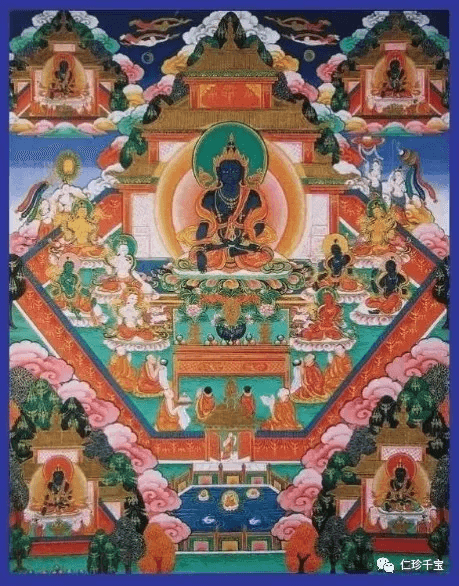
Akshobhya Buddha, also known as Immovable Tathagata or Akshobhya, is the principal Buddha of the Eastern Pure Land of Abhirati. In his past lives, Akshobhya Buddha served as an attendant to Vairocana Buddha, accumulating immeasurable merit. Upon attaining enlightenment, he vowed to “not harbor anger towards sentient beings,” hence the name Akshobhya. Akshobhya means “without anger” or “without rage.”
The Akshobhya Buddha practice is recommended by many masters. Today, our Dharma transmission center is the center of Master Haitao, an old friend of mine who also enjoys reciting the Akshobhya Buddha mantra. Master Haitao and I joked before that we both have two hobbies: performing smoke offerings and reciting the Akshobhya Buddha mantra.
I have been reciting the Akshobhya Buddha mantra since childhood. My earliest exposure to Akshobhya Buddha was through my uncle, Chakri Rinpoche, a Jonang Lama who also practiced Nyingma. From a young age, he practiced the Akshobhya Buddha mantra for both the deceased and other sentient beings. Because of this connection, I also began practicing the Akshobhya Buddha mantra from a young age.
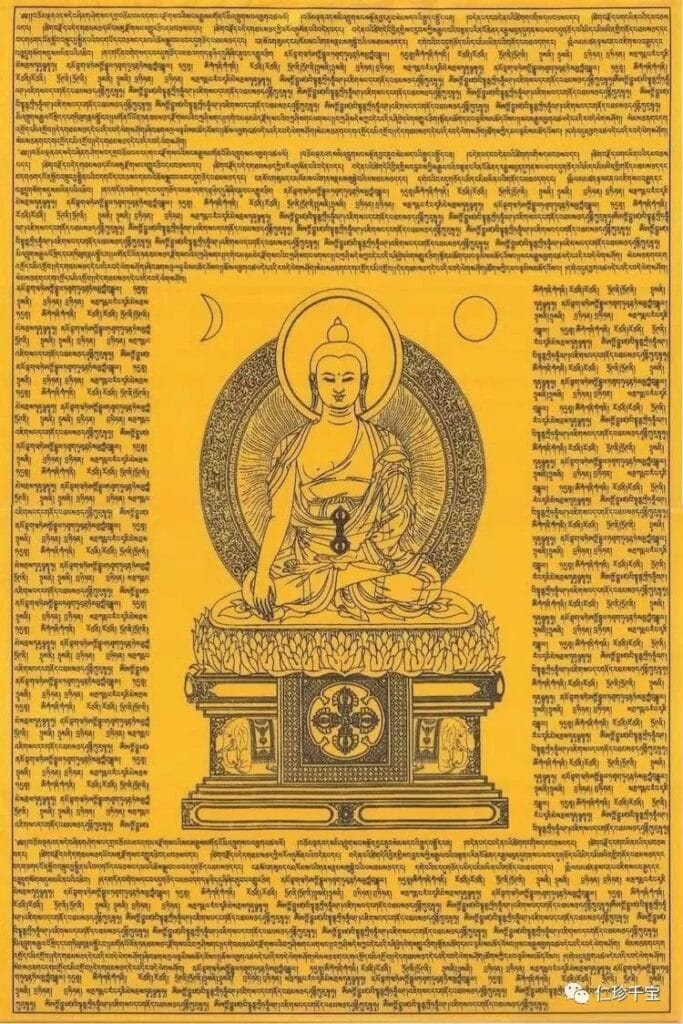
In this degenerate age, the karma of killing is very heavy, making the practice of Akshobhya Buddha very important. Akshobhya Buddha is easy to practice; regardless of whether you understand the rituals, simply reciting the mantra is sufficient. If you don’t know how to recite the mantra, you can read it or carry it with you.
The scriptures on Akshobhya Buddha are found in the Mahayana Ratnakuta Sutra and the Vajrayana Mahavairocana Tantra. When Atisha came to Tibet, Tibetans asked him what the best practice was for eliminating karmic obstacles. Atisha said that practicing Akshobhya Buddha was the best.
There are many methods for eliminating karmic obstacles, but each method has its own specific requirements, precepts, and practices. Akshobhya Buddha is a practice of the Kriya Tantra, belonging to the outer Tantra within Vajrayana. In outer Tantra practice, one must be careful about eating meat; one cannot eat meat during the rituals. However, if one only recites the mantra, there are no requirements; anyone can practice it, and one can eat either meat or vegetables.
The scriptures of Akshobhya Buddha mention that seeing the Akshobhya Buddha mantra, placing it on the deceased, or frequently reciting the Akshobhya Buddha mantra in places with heavy karma of killing will prevent beings who hear the Akshobhya Buddha mantra from falling into hell. Therefore, reciting mantras for the living can eliminate karmic obstacles, and reciting mantras for the deceased can eliminate karma leading to hell.
In the degenerate age, maintaining pure precepts is very difficult; practicing Akshobhya Buddha can purify the sins of breaking precepts. As Buddhists, we must conform to the Eightfold Path, and practicing right conduct within the Eightfold Path is extremely difficult because the environment has a great influence on us. For example, you may want to be vegetarian, but your family members may not; someone in your family may be engaged in work involving killing, such as selling fishing nets, pesticides, or producing pesticides and rat poison; some families may run restaurants and kill animals every day; some people may be in the meat business, etc. Many of these are things we are forced to do against our will, even if we don’t want to.
What should one do when there is a conflict between spiritual practice and daily life? Shantideva, in one chapter of his Bodhicharyavatara, mentions that things that can be changed should be changed with joy; things that cannot be changed are useless to worry about, so let them go. In another chapter, Shantideva further states that as long as one’s understanding is correct, it can become a cause for enlightenment. Understanding this expedient method allows one’s actions to become virtuous deeds and causes of merit.
There are many kinds of expedient methods, including those of the Bodhisattva and those of Vajrayana. The expedient methods of Vajrayana include reciting mantras and visualization, while those of the exoteric tradition include reciting Buddha’s name and dedicating merit. As mentioned earlier, if your environment cannot be changed temporarily, and you cannot leave, but you still need to continue, understanding expedient methods can transform you into a Bodhisattva who guides those in need. Your presence allows you to connect with these suffering beings through Dharma; without your presence, these beings have no one to dedicate merit and bestow blessings upon them. Therefore, don’t be sad. Through the blessings of all Buddhas and Bodhisattvas, recite the mantra of Akshobhya Buddha, or the mantra of Samantabhadra Buddha, the name of Amitabha Buddha, or the mantra of Avalokiteshvara Bodhisattva. These methods have fewer conditions, lower barriers to entry, and greater benefits. Regularly reciting these mantras can benefit all sentient beings around you.
Previously, we established an association in Keelung, Taiwan, located in a fish market. I’m someone who gets a headache from the smell of fish, but we practiced Akshobhya Buddha daily, opening the mandala of Akshobhya Buddha and reciting his name, which benefited the sentient beings there and many others. This is a very good thing. I performed many Akshobhya Buddha empowerments there, and members of the association frequently recited Akshobhya Buddha mantras, the Golden Light Sutra, the Earth Store Sutra, and the Amitabha Sutra, dedicating the merit to the sentient beings in the fish market.
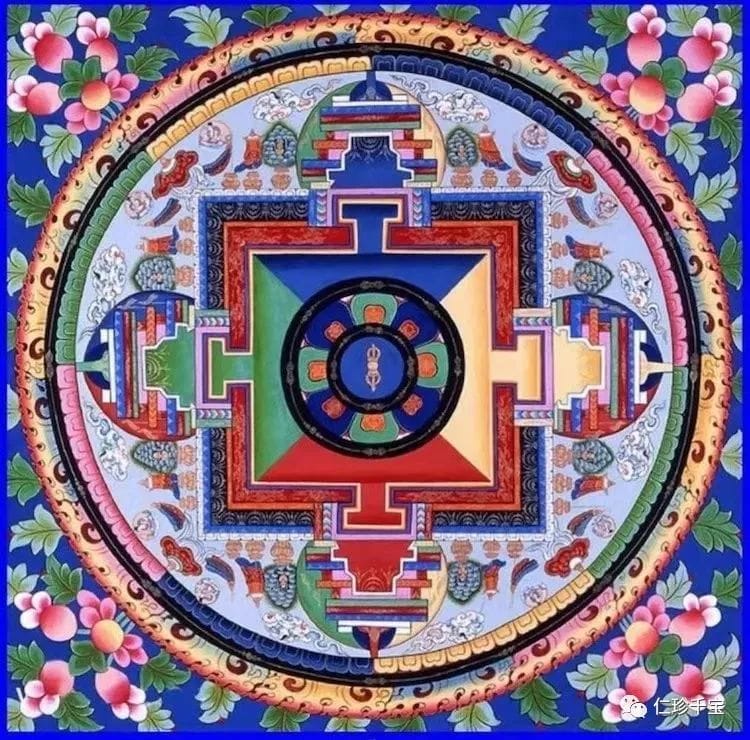
Therefore, everyone should remember that if we find ourselves in such an environment, unable to leave or change it, we should find peace in it and vow to do things that benefit all sentient beings. In this way, you become their protector, their support. Through your merit and virtue, they can escape the three realms. You are a Bodhisattva who guides them; be courageous in doing so.
Besides purifying the sins of breaking precepts, the greatest merit of practicing Akshobhya Buddha is the elimination of the karma of anger. Many masters stopped getting angry after practicing Akshobhya Buddha. For example, Kathok Khenchen Aga mentioned in his biography that he never got angry after completing the Akshobhya Buddha retreat. Our great-uncle, Ongzhu Rinpoche, was previously seen by his teachers as a very arrogant and bad-tempered person. After completing the Akshobhya Buddha retreat, his temper improved. I was with him for a long time and never saw him angry again; he always had a kind face.
Therefore, for those with bad tempers, reciting Akshobhya Buddha’s name is very effective. If you see someone angry, visualize Akshobhya Buddha above their head, recite mantras for them, and pray that Akshobhya Buddha will inspire compassion in their heart and prevent them from creating negative karma through anger.
The merits of Akshobhya Buddha are available online; you can learn more about them. Recite Akshobhya Buddha’s mantra with a pure and sincere mind, and dedicate the merit. You can also recite the mantras of Vajrasattva and Samantabhadra to eliminate karmic obstacles. Samantabhadra is the Dharmakaya form; Akshobhya Buddha appears in the Sambhogakaya form as a Buddha, and Vajrasattva appears in the form of a Bodhisattva. They are all the same; they are all deities for eliminating karmic obstacles.