Conditions for Reaching the Pure Land of Ultimate Bliss – Discourse at the Amitabha Buddha Liberation Ceremony
admin 2025-08-09
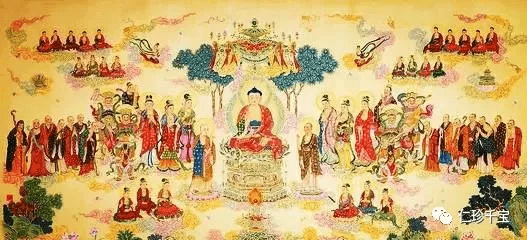
Today is the seventh month of the lunar calendar, the month of filial piety. Due to the pandemic, we cannot gather in person, so we are practicing the Amitabha Buddha Dharma online to liberate sentient beings.
For over 20 years, the Renzhen Qianbao Buddhist Society has held various liberation ceremonies and almsgiving gatherings every year during this month. We use this month to cultivate a kind heart, with the aim of benefiting others, to repay the kindness of our parents, all sentient beings, and the Buddha through these ceremonies.
Liberation is not an easy task; it requires ability and certain qualifications. However, when we perform liberation ceremonies and dedicate merit to our family members, ancestors, and karmic creditors, as long as we have unwavering faith in the Three Jewels, the blessings of the Dharma are inconceivable, and we will certainly benefit sentient beings.
There are many ways to practice Amitabha Buddha, and each lineage has its own traditions. This time, we are practicing the tradition of the Kadampa Desha lineage. Many past masters practiced Amitabha Buddha, and they all ultimately attained rebirth in the Pure Land. The Dharma they passed down will surely benefit future generations.
This Dharma practice is very special to me personally because I have had boundless faith in the patriarch Kadampa Desha since childhood. Throughout my life, through his compassionate blessings, I have received many of his Dharma implements and treasures, such as his skull, texts, images, and keepsakes. These treasures were received unexpectedly and naturally, as if bestowed from heaven, and I cherish them dearly!
My two masters, Shakya Rinpoche and Shechen Ongzhu Rinpoche, also practiced this Dharma. The masters often mentioned, “The patriarchs are in the Pure Land of Ultimate Bliss; they will welcome sentient beings with karmic connections in the future.” Before Shechen Ongzhu Rinpoche passed away at Larung Gar Buddhist Academy, he bestowed the Amitabha empowerment upon Longde Rinpoche and other masters. Afterward, he said he was going to the Pure Land of Ultimate Bliss, and then passed away reciting the syllable “Phat.”
I have heard of or seen people around me who, despite committing many sins in the past, later developed repentance, cultivated unwavering faith in Amitabha Buddha, and sincerely prayed to him. Before their passing, they saw Amitabha Buddha or dreamt of him coming to guide them. Therefore, I have great faith in this Dharma.
We know that Padmasambhava is an emanation of both Amitabha Buddha and Avalokiteshvara Bodhisattva. Amitayus Buddha, Amitayus Buddha, Avalokiteshvara Bodhisattva, Tara, Padmasambhava, and so on—these Buddhas and Bodhisattvas we are familiar with are all emanations of Amitabha Buddha. Therefore, when choosing which Dharma to practice, we can choose the Buddha or Bodhisattva that corresponds to us. Regardless of which one we practice, we can reach Amitabha Buddha’s Pure Land.
Of all the exoteric Dharma gates, regardless of whether one is of superior or inferior capacity, and regardless of the conditions that depend on one’s capacity, the Amitabha Dharma gate can be said to be easy to practice and easy to achieve.
Although when unwavering faith arises in any Buddha or Bodhisattva, there is only one pure Dharma realm, without any distinction. However, in the eyes of sentient beings with discriminating thoughts, the deities they resonate with are all related to the Lotus Family teachings. Vajrayana has the Five Dhyani Buddhas, and among them, the teachings of the Western Lotus Family have a special affinity with sentient beings in the Desire Realm; they are easier to practice and easier to achieve enlightenment. Amitabha Buddha is a representative of the Lotus Family teachings, therefore we can easily resonate with him.
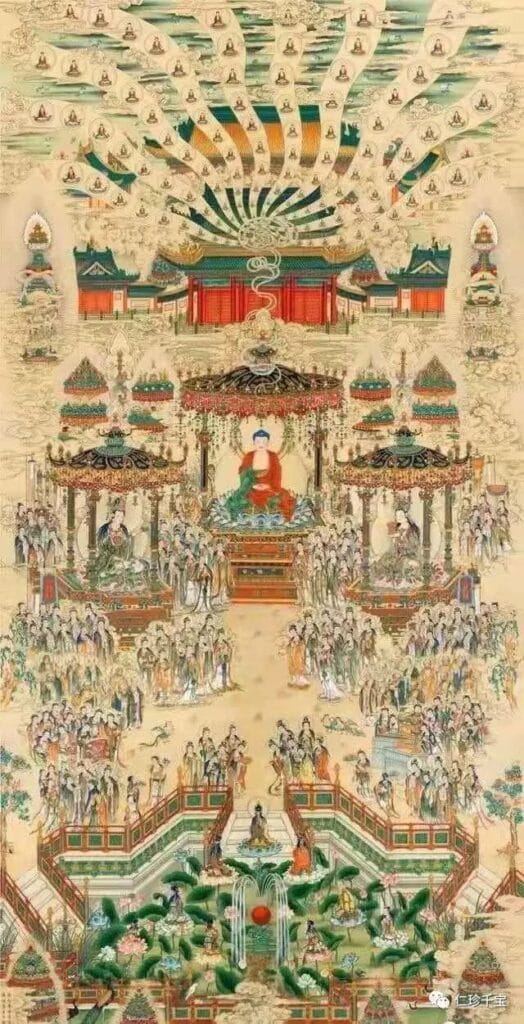
Conditions for Reaching the Pure Land of Ultimate Bliss
The conditions for reaching the Pure Land of Ultimate Bliss vary slightly from sutra to sutra, but generally can be summarized into four:
First, one must have faith.
In the Vajrayana tradition, faith is the key to attainment, and it is also a distinctive feature of Buddhism. In all religions, the connection or correspondence with Buddhas and deities hinges on faith. Every lineage’s founders have emphasized faith. Without faith, practicing any Dharma is merely a superficial imitation; while it may plant good seeds, it may not necessarily lead to the desired goal. Therefore, unwavering faith is essential for our attainment.
To cultivate faith, one should frequently contemplate the virtues of Amitabha Buddha, read Mahayana scriptures such as the Amitabha Sutra, or associate with virtuous teachers. These methods help nurture faith.
Second, one must cultivate a vast Bodhicitta.
During practice, one must have the aspiration for all sentient beings to attain enlightenment. If one’s mind is too small and narrow, unable to generate Bodhicitta for all sentient beings, the Pure Land of Ultimate Bliss will not resonate with your heart, making it unlikely that you will reach the Pure Land.
One must open one’s heart, bless all sentient beings, generate Bodhicitta for all sentient beings, cultivate merit and virtue for all sentient beings, and repent for all sentient beings. Only by practicing the Amitabha Buddha’s Dharma on the basis of benefiting all sentient beings can one resonate with Amitabha Buddha, connect with the Pure Land of Ultimate Bliss, and reach the Pure Land.
The most fundamental condition for the Mahayana Dharma is generating Bodhicitta. Without generating Bodhicitta, it is unlikely to reach the Pure Land of Ultimate Bliss. Some say that there are also followers of the Śrāvakayāna in the Pure Land. Why can these followers, whose Bodhicitta is not strong enough, still reach the Pure Land?
There are several explanations. One is that these followers of the Śrāvakayāna are manifestations of Bodhisattvas. Another is that ordinary people reach the Pure Land of Ultimate Bliss through the power of vows and faith.
The Pure Land of Ultimate Bliss is said to have nine grades of lotus flowers, divided into nine different levels. Therefore, ordinary people who frequently think of Amitabha Buddha and the Pure Land of Ultimate Bliss, and recite Amitabha Buddha’s holy name, etc., in a state of constant recitation and contemplation, with firm faith and vows, can reach the lower grades of the Pure Land of Ultimate Bliss.
Although it’s the lowest level of the Pure Land of Ultimate Bliss, it’s already quite good that you don’t go to hell or escape the six realms of reincarnation. Once you get there, you can cultivate Bodhicitta and then go to the higher level of the Pure Land of Ultimate Bliss. Regardless of whether it’s the lowest or highest level, reaching it is already a great achievement!
Thirdly, cultivate merit and repent.
Amitabha Buddha vowed countless eons ago to practice the Bodhisattva path for three asamkhya kalpas. He made vows for sentient beings, accumulating merit and resources for them. The Pure Land he created through his vows is the Pure Land of Ultimate Bliss. Therefore, we should frequently contemplate the Pure Land of Ultimate Bliss. If you don’t understand contemplation, just think of Amitabha Buddha’s Pure Land of Ultimate Bliss as the most beautiful world.
The description of the Pure Land of Ultimate Bliss is very detailed in the Amitabha Sutra. All the good things you can imagine exist in this world. When you frequently think of Amitabha Buddha, the Pure Land of Ultimate Bliss, and the Eight Great Bodhisattvas, these Pure Lands are imprinted in your Alaya consciousness, and impure thoughts, concepts, attachments to people and things, etc., will not arise.
When your consciousness is free of impure thoughts, whether you see, hear, or think, Amitabha Buddha, Avalokiteshvara Bodhisattva, Padmasambhava, and all the Buddhas and Bodhisattvas you are most familiar with, like, and want to see are in the Pure Land. In this state, with the blessings of the Pure Land, the vows of Amitabha Buddha, and the power of your own faith, impure karmic obstacles, habitual tendencies, and afflictions will gradually be cleared away through the power of meditation and right view, revealing a pure state.
Why can’t we reveal a pure state? Because our karmic obstacles are deep and our merits are insufficient! Therefore, we practice Dharma for all sentient beings, cultivate merit for all sentient beings, and repent for all sentient beings. Practicing on this basis, even if our Bodhicitta is not yet stable, we can still reach the Pure Land!
Fourth, Dedicate the Merit
To go to the Pure Land, besides constantly thinking of Amitabha Buddha and the Pure Land, having faith, Bodhicitta, cultivating merit, and repenting, you must finally dedicate all your virtuous deeds. The power of our virtuous deeds, when combined, aims to help all sentient beings be reborn in the Pure Land of Ultimate Bliss. Therefore, we must not forget to dedicate the merit after each practice session; dedication encompasses everything!
Without faith in the Dharma, Bodhicitta and the intention to dedicate merit will not arise. Bodhicitta is the foundation of Mahayana Buddhism. When we follow the vows of the Eight Great Bodhisattvas, we are already generating Bodhicitta. Finally, through the power of dedication, we can eliminate karmic obstacles and preserve our virtuous deeds.
With faith, Bodhicitta, practice of merit and repentance, and dedication—these four conditions are sufficient to reach the Pure Land of Ultimate Bliss! If we cannot reach the Pure Land, we must examine ourselves and reflect on whether we have fulfilled these four conditions.
Vajrayana has many practices, each capable of purifying sentient beings’ habitual tendencies, afflictions, and impure attachments. Each practice is sublime and has its own unique characteristics. All Buddhas are of one essence, and all dharmas are of one mind. Any practice we undertake is related to the Pure Land of Ultimate Bliss. Therefore, we do not need too many complex practices. A good practice is one that can quickly purify our habitual tendencies and afflictions and resonate with us!
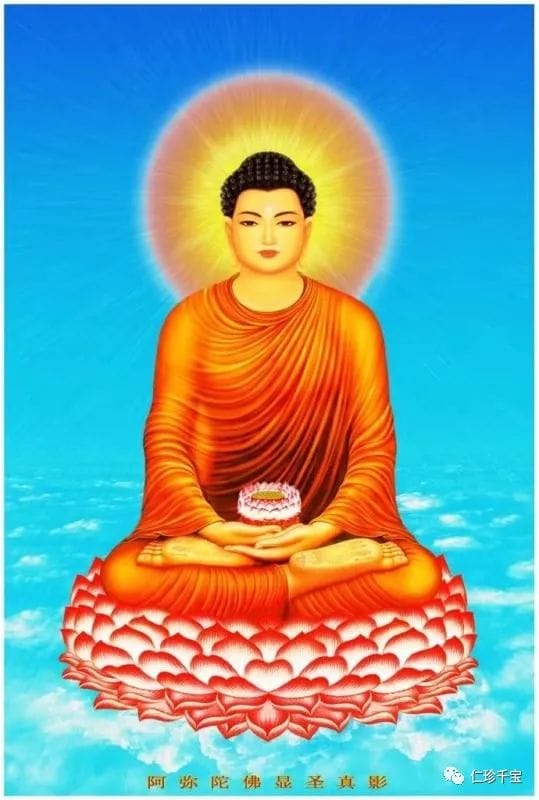
The Purpose of Participating in a Liberation Ceremony
The purpose of participating in a Liberation Ceremony is not only to gain benefits in this life, but also in the next! In this life, firstly, it can purify one’s sins and eliminate obstacles and calamities in one’s career and life; secondly, it ensures that both work and spiritual practice are smoothly fulfilled.
In the next life, through the Liberation Ceremony, we repay the kindness of our parents, all sentient beings, and the Three Jewels, and establish a special Dharma connection with all sentient beings. Although we may not achieve enlightenment in this life, we can plant good seeds for the next life or the life after that. By remaining inseparable from the Three Jewels, the Dharma, and the teachings in every lifetime, without confusion or taking wrong paths, we can attain the state of Amitabha Buddha. Therefore, every time we participate in a Dharma assembly or group practice, we should know our purpose.
Although we experience some enjoyment in samsara, the stage where our six senses are purified and in harmony with the Three Jewels is very rare. Now we can be with the Three Jewels, with our Guru, and with our pure fellow practitioners, making vows and practicing together to repay the kindness of the Buddha, our parents, and all sentient beings. Every one or two hours spent reciting a Buddha’s name or a mantra is a precious, joyful, auspicious, and happiest moment for us; therefore, we must cherish it!
During group practice, everyone should maintain a pure perspective: pure visualization, pure understanding, pure viewpoints, and pure actions. Purity spreads among us, and in this way, everyone becomes pure. If we hear, see, or think with impure thoughts, it will pollute our pure souls, consciousness, and actions. This impurity will also pollute everyone else, affecting the world and society, and becoming a significant obstacle in our lives.
However, it is normal to have impure thoughts when we first begin our practice. Through listening, contemplating, and meditating, we gradually improve our souls and wisdom. As the original defilements become increasingly pure, we draw closer and closer to the pure state of the Buddhas and Bodhisattvas.
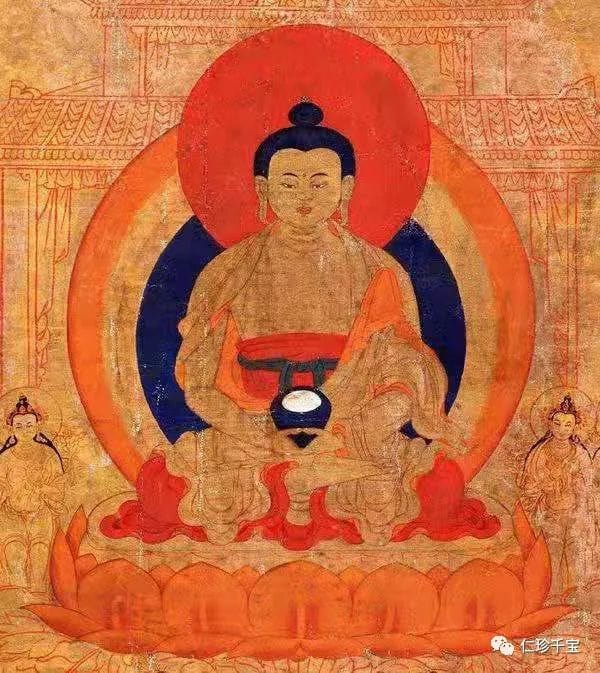
A pure perspective is essential for successful liberation.
Vajrayana practice includes close practice (approaching Buddhas and Bodhisattvas), intimate practice (resonating with Buddhas and Bodhisattvas), accomplished practice (being able to perceive Buddhas and Bodhisattvas and benefit oneself), and great accomplished practice (being able to utilize the power of the Three Jewels’ vows, concentration, or dependent origination to benefit others and perform acts of kindness).
Regarding liberation rituals, this is the realm of Bodhisattvas with profound insight; ordinary people lack this ability. Ordinary people cannot even liberate themselves, how can they liberate others? We rely not on our own power, but on the power of others—the power of the Three Jewels’ vows, the blessings of mantras, and the power of rituals and karmic connections.
With these powers, sentient beings will certainly benefit. This is the power of Amitabha Buddha’s vows, the result of Amitabha Buddha’s countless accumulations of merit and the two virtues of realization and cessation over countless eons. Amitabha Buddha has told, promised, and guaranteed that we can liberate the souls of beings in the intermediate state (bardo) to the Pure Land. Therefore, through the liberation ritual and through Amitabha Buddha’s vows, we believe there will be no problem.
Without pure perception, if you doubt the methods of liberation or harbor discriminatory thoughts that you cannot liberate sentient beings, you cannot liberate them. No matter how many rituals you perform or how many mantras you recite, your dedication of merit will lack power. This is because when you generate the aspiration, you doubt whether the method has the power, whether you yourself have the ability, and whether the sentient beings being liberated can feel it. When you have doubts about yourself, others, your faith, your aspiration, and the merits of all Buddhas and Bodhisattvas, your dedication of merit will be powerless.
When dedication of merit lacks power, you must repent more and accumulate more merit and wisdom; otherwise, you cannot embark on the Bodhisattva path. Therefore, I often say that you must have unwavering faith when practicing Dharma.
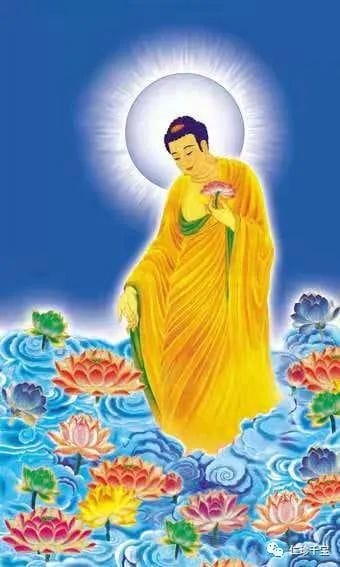
The Mindset for Practicing Dharma
It would be best if we could see the Pure Land before we die; it would be even better if we could see it as if it existed on a screen while in a state of meditative absorption. If this is not possible, then we should accept that it does exist.
Vajrayana speaks of “Buddha-pride,” which does not refer to arrogance about one’s race, appearance, abilities, knowledge, or culture. Buddha-pride refers to believing in the power of Buddhas and Bodhisattvas; believing in the power of one’s own meditative absorption; believing in the power of dependent origination; believing that one possesses the great compassion and power of the Buddha—that what the Buddha can do, I can also do. One should have this kind of Buddha-like pride.
Regarding the power of dependent origination, we can now see and hear each other through the internet, without distance—this is the power of dependent origination. The power of dependent origination is the lowest of the three powers of Buddhas and Bodhisattvas; the highest is concentration (the power of meditative absorption), and the next is the power of mantras.
The lower level of the power of dependent origination is visible and achievable, therefore widespread and common. The power of intermediate-level mantras is possessed by only a few; the power of meditative concentration is possessed by an extremely small number of people, just as cutting-edge high technology can only be invented by a handful of individuals.
Why didn’t the Buddha invent high technology? Because, ultimately, high technology only brings suffering to sentient beings. Why do I say this? Just look at the troubles caused by electronic products today. Children are addicted to video games, causing parents great worry; some parents are addicted to video games and neglect their children. Because of this, many social and family problems have arisen. Then there’s the invention of mobile phones; while they bring convenience to our lives, they also harm our health. And then there are nuclear weapons; if used in war, the world would be destroyed, and so on!
The Buddha didn’t invent high technology; the Buddha wished for the liberation of sentient beings. The Buddha taught us about the power of dependent origination, the power of mantras, the power of concentration, etc. When these are complete—precepts, concentration, and wisdom—liberation can be attained, and we can reach the beautiful Pure Land we desire.
Therefore, in our practice, we must have faith. We must believe in the power of the Buddha, in the vows of the lineage masters and accomplished practitioners generation after generation, and in the blessings of all Buddhas and Bodhisattvas of the ten directions. By practicing pure Dharma in a pure state, we will certainly have the ability to benefit all sentient beings.
Let us begin our practice with this kind of pride, hoping that all sentient beings we vow to liberate will receive the salvation of Amitabha Buddha and be reborn in the Pure Land of Ultimate Bliss.