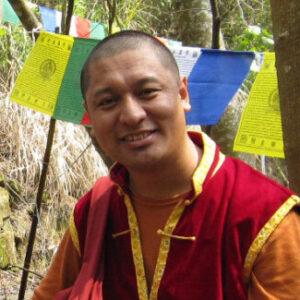
July 9, 2019, at the Korri Mantra Retreat Center, New Zealand
Today, I am transmitting the empowerment of the wrathful deity of Guru Rinpoche. Guru Rinpoche’s teachings include peaceful and wrathful deities, among many others. Wrathful deities include red, blue, and various forms such as one-faced and two-armed, three-faced and six-armed, nine-faced and eighteen-armed, etc.
Today, I am transmitting the one-faced, two-armed Wisdom-Blazing Wrathful Guru Rinpoche. I have practiced this teaching since childhood. Our monastery belongs to the Rimé school (non-sectarian), with both the Kathok lineage and the lineage of Longsal Nyangpo. We usually practice the Kathok lineage more. This teaching is a terma (hidden treasure) revealed by the Kathok tertön (treasure revealer) Longsal Nyangpo.
The location for today’s transmission is the Korri Mantra Retreat Center in New Zealand. It is particularly appropriate to transmit this teaching here because the image of Longsal Nyangpo has arrived. This is an image of the Venerable Longsal Nyangpo as he is. There are two images of the Venerable Longsal Nyangpo as he is, one in Kathok Monastery and one in Korri Monastery. I only recently saw the photo of the Venerable Longsal Nyenpo at Keri Monastery, but I saw the one at Kathok Monastery a long time ago. The statue of Longsal Nyenpo at Kathok Monastery has been restored several times.
Keri Monastery is located in Litang County, Tibet. It is the monastery of Longsal Nyenpo. I know the history of this monastery very well, but I have never been there. Usually, when you see Longsal Nyenpo’s teachings, you will see the name of this monastery. Longsal Nyenpo often mentioned Keri Monastery when talking about where he retrieved his terma teachings, because he translated the dakini texts of the terma teachings into sutras in his retreat room at Keri Monastery (Keri Mantra Continent). The peaceful and wrathful deities empowerment we will be receiving tomorrow was also written in that retreat room.
The Wrathful Wisdom Guru Rinpoche was retrieved by Longsal Nyenpo at Nangqing Zhaga Mountain near Keri Monastery, which is also a sacred site of Guru Rinpoche. Most of the Venerable Longsal Nyingpo’s earth treasure teachings were retrieved from the Litang and Xinlong areas, while his mind treasure teachings were not necessarily from these areas; he retrieved mind treasure teachings from many places.
The most important of all the Venerable Longsal Nyingpo’s teachings is the Wrathful Wisdom Guru Rinpoche, which is his most representative treasure teaching. The blessings of this teaching are extremely auspicious. The Venerable Longsal Nyingpo himself became famous through this teaching, his Buddhist activities unfolded through this teaching, and the obstacles in his life were removed through this teaching. Therefore, we say that the Wrathful Wisdom Guru Rinpoche is the most special teaching of Venerable Longsal Nyingpo.
Venerable Longsal Nyingpo subdued many demons through this teaching, some of whom were practitioners who had become vengeful ghosts. As you know, Kathok Monastery used to have many rainbow body achievers. Because everyone in the monastery attained the rainbow body, the monastery was abandoned for a period of time and became ruins. Later, some practitioners went to live in the ruins, and strange things happened while they were there; many people became vengeful ghosts. Although it was a sacred place, no one dared to live there again. Legend has it that this period lasted for nearly two or three hundred years, but I estimate it was probably not that long, more than a hundred years.
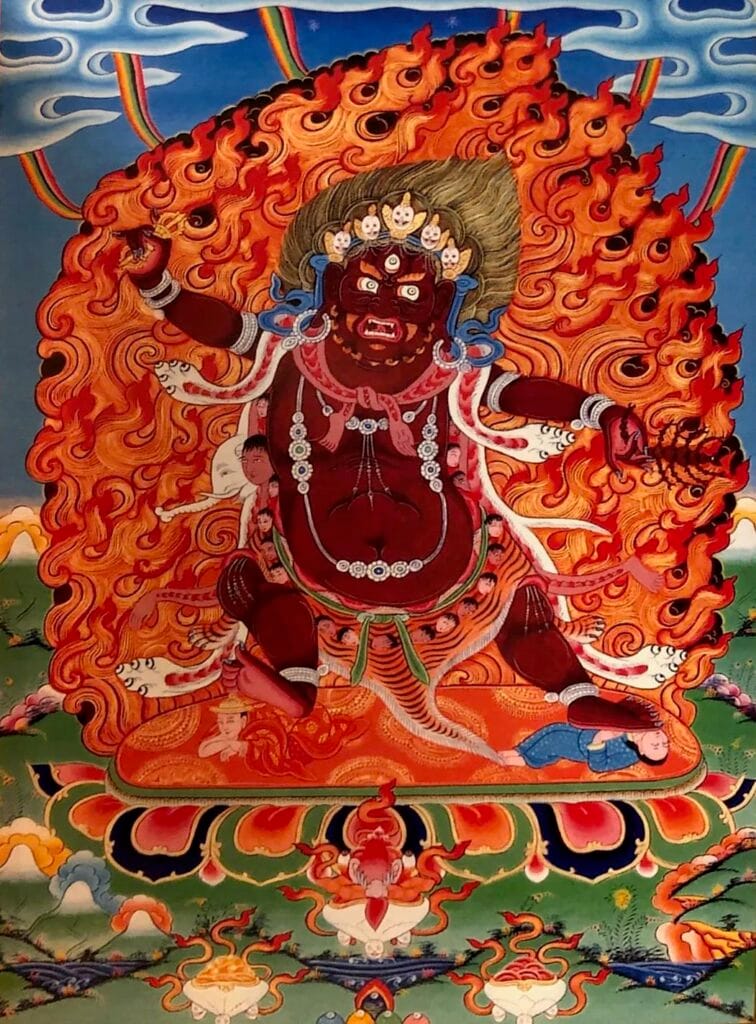
The Wrathful Guru Rinpoche of Wisdom
The present-day Kathok Monastery was later established by Longsal Nyonpo, when the local official was the King of Dege. Do you know the Dege Printing House? It’s currently the largest printing house in Tibet. Previously, Tibet had several large printing houses, such as the Natang Monastery Printing House and the Potala Palace Printing House, but these were destroyed and are currently being restored. Only the Dege Printing House remains relatively intact. The local chieftain of the area where the Dege Printing House is located was the King of Dege. He invited Longsal Nyonpo to Kathok Monastery to subdue demons. Longsal Nyonpo subdued these demons through the practice of the Wrathful Guru Rinpoche of Wisdom. When he subdued the demons, he manifested as the Wrathful Guru Rinpoche, showering down fire and many scorpions. Therefore, if you look at Longsal Nyonpo’s images, his ritual implement is a poisonous scorpion.
After subduing these demons, Longsal Nyonpo purified Kathok Monastery and then rebuilt it. Thus, people began to believe in the great power of Longsal Nyingpo and this Dharma, and he received everyone’s praise and respect. Nearly three hundred years have passed since the reconstruction of Kathok Monastery, and many practitioners have attained enlightenment during these three hundred years—this is due to the grace of Longsal Nyingpo. Because of the excellence of this Dharma, there has been relative peace.
There were many wrathful Guru Rinpoche practices in Tibet before, but later, the Kham region preferred the practice of Longsal Nyingpo’s Wisdom-Fiery Wrathful Guru Rinpoche. This is because the lineage is more recent, the blessings are swift, and it is a Dharma practice relevant to the present age, perfectly suited for people of this era. Because of this, many auspicious conditions arose. My teacher, Shartsa Rinpoche, often practiced a simplified version of this Dharma when blessing others, as did many previous teachers. Therefore, this Dharma not only contributed to the flourishing of Longsal Nyingpo’s teachings but also greatly aided the reconstruction of Kathok Monastery, the subsequent flourishing of its teachings, and the flourishing of Guru Rinpoche’s teachings.
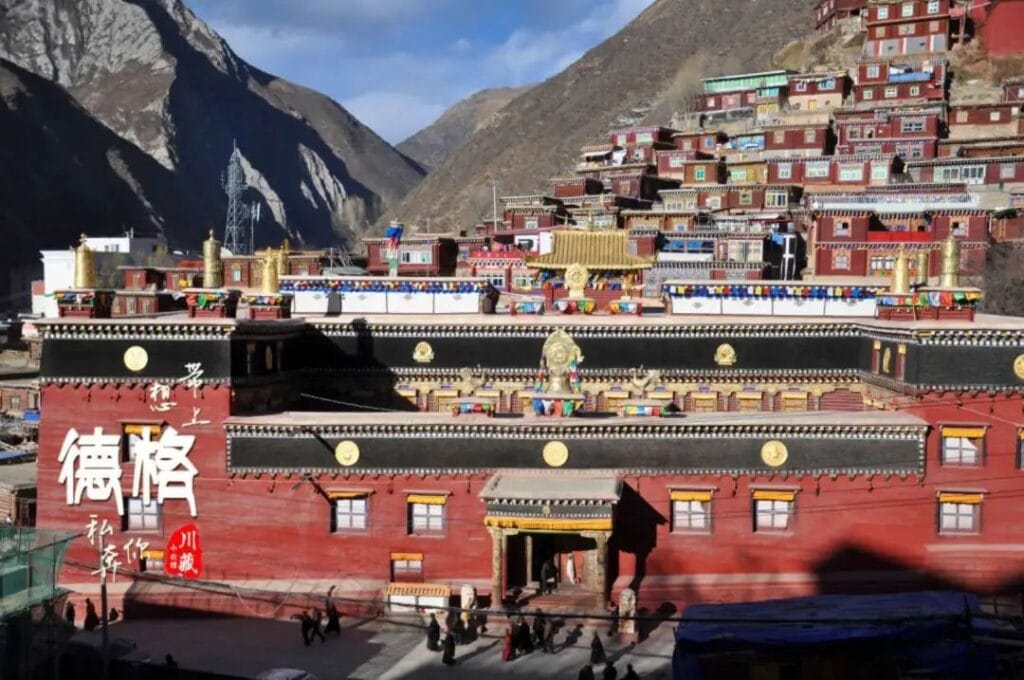
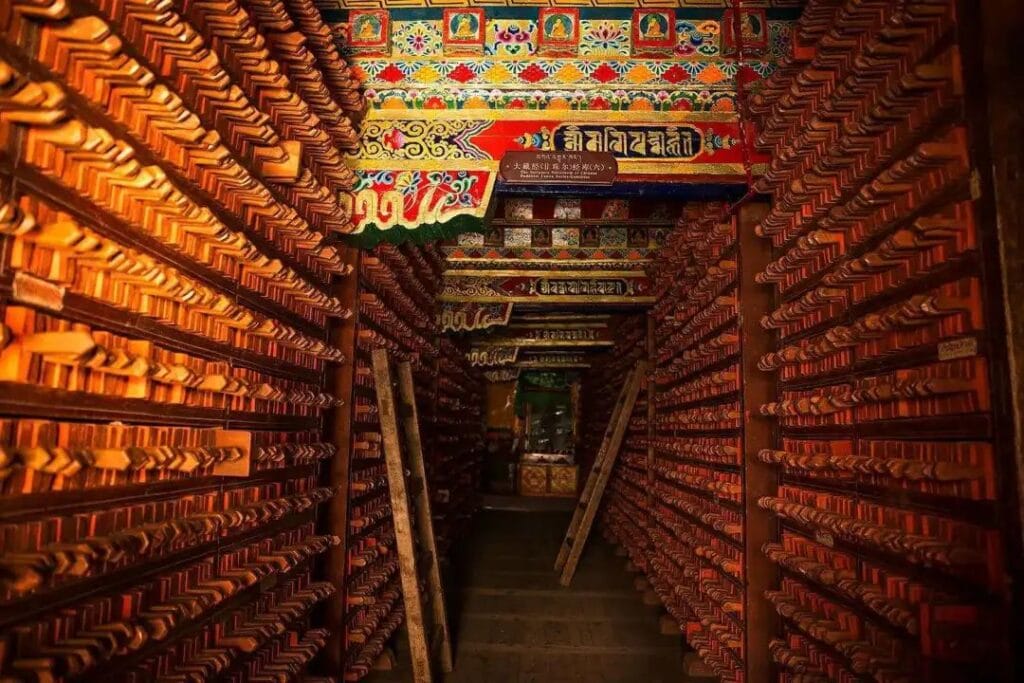
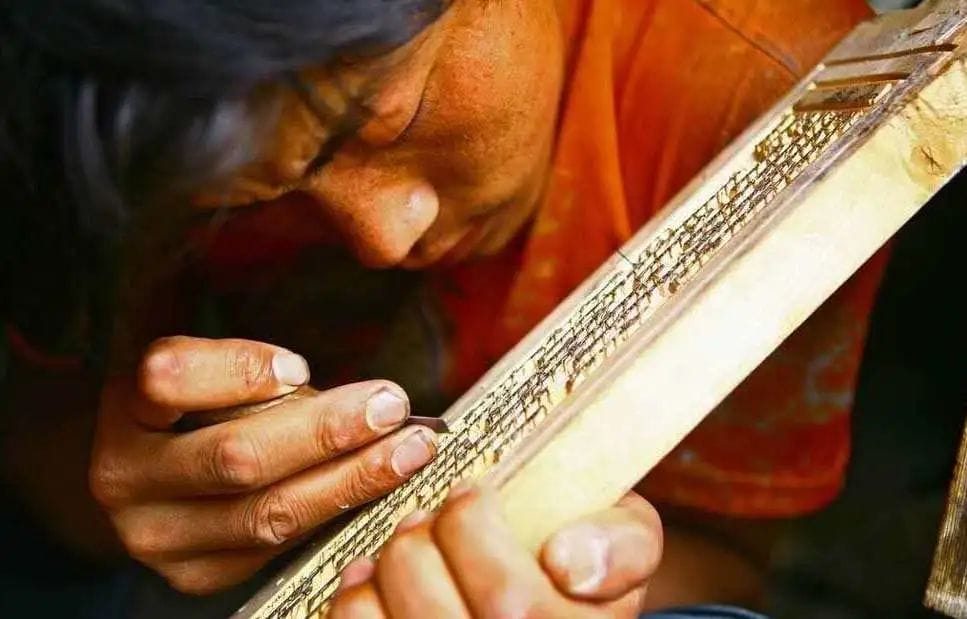
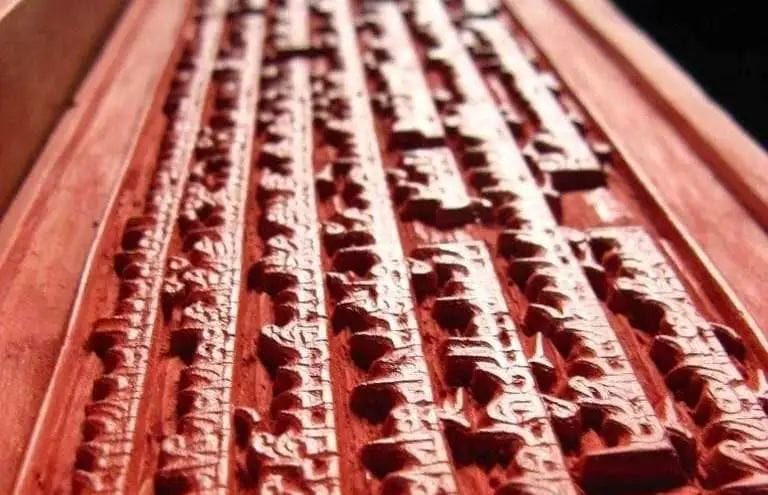
Dege Printing House, Tibet (Image from the internet)
When I was a teenager, there was a Palyul school master in our monastery named Gelong Rinpoche, some people called him Longpo Rinpoche, he had several names. He required everyone in the monastery to practice this Wrathful Guru Rinpoche practice. At that time, we all vowed to recite the mantra 100,000 times. I was very young then, I’ve forgotten how old I was, it was my uncle, Chazu Rinpoche, who transmitted it to me. He grew up in our ancestral monastery—Mula Monastery—and later became the abbot, propagating the teachings of Longsal Nyangpo and Dundu Dorje. He himself was recognized from childhood as a reincarnation of the Jonang school. My first empowerment of this practice was under my uncle, and later I received empowerments from many other masters. Under Shazha Rinpoche, I received the oral transmission of this practice. The oral transmissions of Dundu Dorje’s Wrathful Guru Rinpoche Vajrabhairava and Longsal Nyangpo’s Wisdom Blazing Wrathful Guru Rinpoche were both transmitted to me by Shazha Rinpoche through my request.
This Dharma has a root tantra, and I am probably the person who printed the most of it. This root tantra can be considered a protective wheel. Previously, this root tantra was rare because it should have been included when the Great Treasure of Terma was compiled. Jamgon Kongtrul Rinpoche also mentioned that this root tantra has numerous merits and benefits, but it wasn’t included in the Great Treasure of Terma for some reason. It wasn’t included in the early Indian and Nepalese editions of the complete works of Dudjom Dorje and Longsal Nyenpo. Later, Shakya Rinpoche found it in the hair of a yogi in Xinlong County, and subsequently found several other versions, but the earliest version found is the one we have now. Shakya Rinpoche had this root tantra reprinted by Bhutanese people once, and he also made a copy, giving one to each of his disciples and giving oral transmissions. He said that sentient beings in the degenerate age face many obstacles, especially demonic obstacles, and making it into a protective wheel to place at home or carry on one’s person will protect one from the harm of demons.
Later, I printed it several times in Nepal, but it wasn’t printed well. The printing machines in Nepal are not very good; each time I printed, the machine broke down. After that, I printed them in Taiwan, once printing over 10,000 copies which were sent to various places in Nepal and Tibet. The root tantra comes in large and small sizes; the small ones are very good because they have several dakini characters on them, written personally by Shakya Rinpoche. His calligraphy is excellent, so I requested my teacher to copy them. These dakini characters have great blessings; carrying them will protect you from demons. I still carry them with me all the time.
Previously, I think it was in Rangtang County, there was a forest area where many people went to haul timber, but there was one area that no one dared to go to, no matter who they were; anything that went there would be bad luck. However, if you carried the dakini characters of Longsal Nyingpo or the protective wheel of Wrathful Guru Rinpoche, there would be no problem. In early Tibet, people had a custom of wearing hats. These white hats had a red cloth on top, printed with the dakini script of Longsal Nyingpo. Wearing this hat meant one would be protected from demons and demigods wherever one went; these were the worldly benefits of this practice. In terms of transcendental benefits, all obstacles on the path of practice—renunciation, bodhicitta, and the obstacles to the generation and completion stages—could be eliminated, leading to the attainment of Guru Rinpoche’s state.
This practice was transmitted by Guru Rinpoche at Qingpu Mountain. All wrathful Guru Rinpoche practices originated from there. When you go on pilgrimage to Qingpu Mountain, you can see scorpion imprints on the rocks, the imprint of Guru Rinpoche’s vajra, naturally appearing one-faced, two-armed wrathful Guru Rinpoche images, and caves with Garuda (Garuda), etc.
When Guru Rinpoche traveled from Nepal to Tibet, many local Tibetan mountain gods and demigods did not want the pure Dharma to spread there. Therefore, they created many obstacles, including thunder, earthquakes, avalanches, fires, and encounters with humans and non-humans. At this time, Guru Rinpoche manifested as the wrathful form of Guru Rinpoche, subduing humans, gods, and demons. The first subjugation took place on Mount Haiburi, a small hill in front of Samye Monastery, where several small stupas stand. There, Guru Rinpoche performed the Vajra Dance to subdue the eight classes of beings, including the celestial beings and dragons. Later, he subdued the demon king and others on Mount Qingpu. Then, he began building Samye Monastery and propagating the teachings of both exoteric and esoteric Buddhism.
The wrathful Guru Rinpoche teachings have both distant and direct transmissions. The earliest direct transmission comes from the terton Nyima Wosel; the earliest distant transmission comes from Wochan Wangchuk, one of Guru Rinpoche’s 25 heart disciples, an accomplished master of water who could meditate in water without drowning.
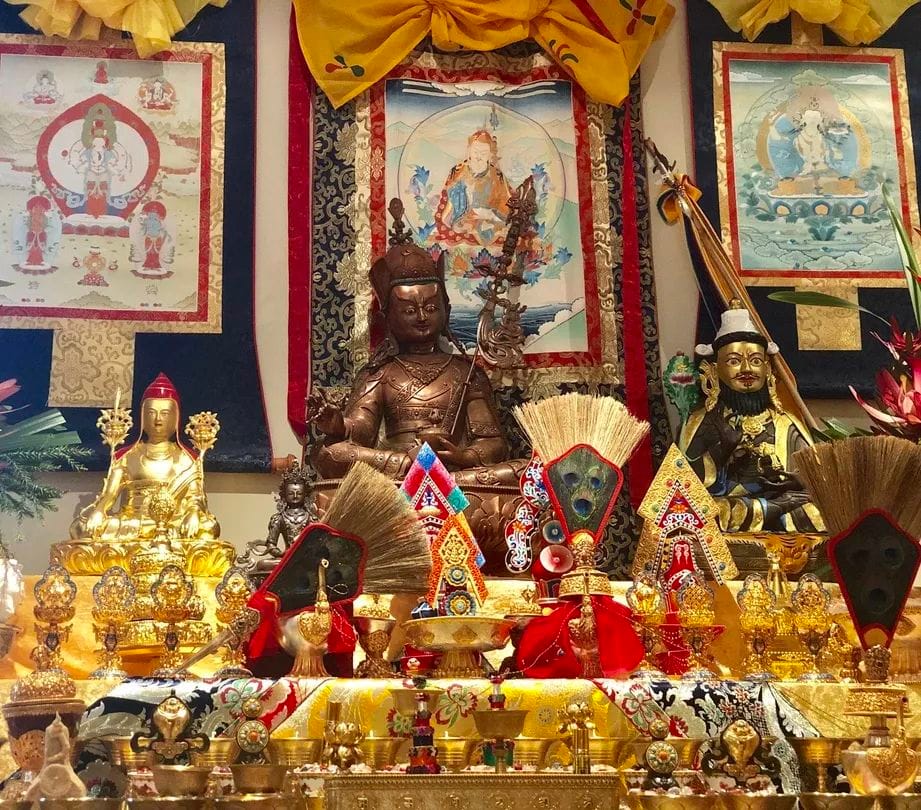
New Zealand Kerri Miju Island Retreat Center
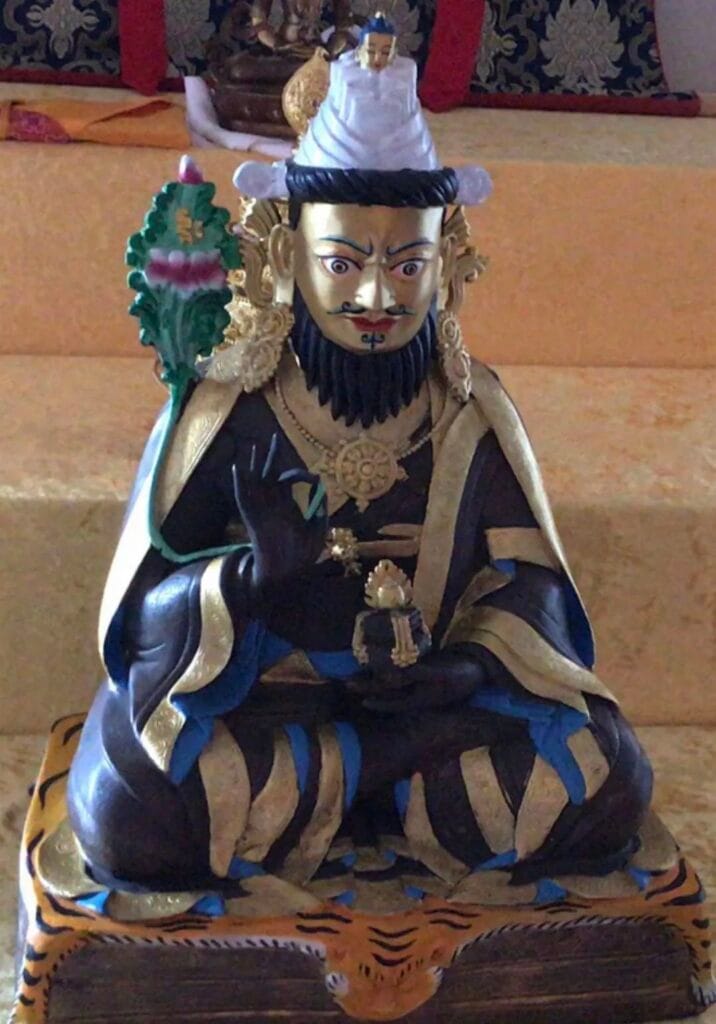
A portrait of Longsal Nyangpo
Later, many practitioners of the New Translation School practiced the Wrathful Guru Rinpoche teachings, which are now included in the Sakya school’s tantra collection. Many early Sakya masters practiced the lineage of Nyang Nyima Woser, because a Sakya Dachen Rinpoche named Drokchen Wangding Nyangpo was the daughter of Nyang Nyima Woser, a renowned figure of great spiritual power within the Sakya school. Due to this connection, the Sakya school practiced the Nyang Wrathful Guru Rinpoche teachings extensively at that time. However, the Sakya school did not begin practicing the Nyang Wrathful Guru Rinpoche teachings at this time. An earlier master, Danyu Gengalpa, also a descendant of Nyang, practiced the Wrathful Guru Rinpoche teachings hundreds of millions of times. Therefore, the Sakya school also practices the distant transmission, while the close transmission follows the lineage of Nyang Nyima Woser.
In the early days, the most prevalent practice of the Wrathful Guru Rinpoche teachings in the Amdo and Kham regions was the transmission of Nyang Nyima Woser. There were also some practitioners of the Wrathful Guru Rinpoche teachings of Mindrolling Tertön and Ratna Lingpa, among others, practiced in schools like Palyul and Mindrolling Monastery. However, since the emergence of Longsal Nyangpo’s Wisdom-Fiery Wrathful Guru Rinpoche teachings, the entire Kham region, regardless of sect, has embraced the Wisdom-Fiery Wrathful Guru Rinpoche teachings. This is due to the lineage and power of this teaching, as I just mentioned.
Where this teaching is practiced, it is protected by Guru Rinpoche’s Dharma protectors. The three roots’ uncommon protectors, such as Ekajati, Rahula, and Vajrapani, will naturally come to protect you. Therefore, those who accept this teaching will certainly receive the blessings of Longsal Nyangpo and the protection of the three uncommon protectors.
Practicing this Dharma in our time is extremely important. The prophecies of the Wrathful Guru Rinpoche Dharma record that in the degenerate age, many practitioners, due to impure aspirations and motivations, may attain some power through reciting many mantras, but ultimately risk becoming demons who harm innocent people and practitioners without spiritual power, or even destroy the Dharma. Practicing this Dharma at this time is exceptionally auspicious.
The treasure revealer of the Wrathful Guru Rinpoche Dharma, as mentioned earlier, is Longsal Nyenpo. He had several names, but Longsal Nyenpo is the most familiar; his other names are rarely mentioned. His terma (hidden treasure) name is Pema Dorje Alingpa, the same as the first Jamyang Khyentse Wangpo. However, the name Longsal Nyenpo is mentioned more frequently in prayers and other Dharma collections, making it the most well-known name. The Venerable One himself was an emanation of the combined translator Langdro Gonchok Jungne and Venerable Marenchenchok, two of Guru Rinpoche’s 25 heart disciples. He retrieved many terma (hidden treasure) teachings, including the teachings of Vimalamitra and Guru Rinpoche, as well as oral instructions, empowerments, and transmissions from other schools.
The Wisdom-Burning Wrathful Guru Rinpoche teachings have extensive, intermediate, and concise practices and empowerments. Empowerments include detailed two-day empowerments, intermediate-path definitive empowerments (definitive empowerments are divided into extensive detailed empowerments and essential monastic empowerments), and concise torma empowerments. There are also empowerments of body, speech, and mind, empowerments of the eight classes of gods and dragons, and empowerments of Amitayus, etc. This teaching itself has more than ten empowerments; if the protectors are also empowered, it would take at least two to three days. This time, we are giving the detailed definitive empowerment.
In my lineage, I have received the transmission of this teaching from many masters. I received detailed definitive empowerments once each under Penor Rinpoche and Pema Rinpoche, and a simpler definitive empowerment under Ongzhu Rinpoche, who transmitted it in Nepal. Oral transmissions and explanations were received from several masters, including my uncle, Chagtso Rinpoche, whom I mentioned earlier, and Shakya Rinpoche. I vaguely recall that Khamzang Master gave me a transmission, but I’m unsure if he gave me an oral transmission, and I’ve forgotten some of the other transmissions. Therefore, this is how my lineage of this practice came about.
From a young age, I’ve loved practicing the teachings of Padmasambhava, and I’ve also practiced Wrathful Padmasambhava for a long time, and I’ve done many retreats. Before transmitting the Great Treasure Terma in Kham, for nearly two or three years prior, I completed all the necessary retreats for the Wrathful Padmasambhava practice in Taiwan, and I also completed a retreat on the Wrathful Padmasambhava of Blazing Wisdom.
The significance of empowerment itself is to fulfill vows and receive blessings. “Making amends” means that if you break a vow after receiving it, you need to make amends through initiation. Another purpose is to remove obstacles. Through the faith and power of the guru and the congregation, the mandala is opened through group practice, breaking down worldly and otherworldly obstacles. Anyone who enters this mandala has already received the blessings of all Buddhas and Bodhisattvas. Therefore, initiation is a ritual of repentance, as well as a ritual for accumulating merit and removing obstacles.
You can find some of my initiation teachings in the Recitation Text for Disciples Who Hear the Dharma or online. You can look at the merits of initiation and the things to pay attention to during it. What kind of practice should be done after initiation? First, recite the mantra of Padmasambhava; second, recite the Vajrasattva mantra and the Hundred Syllable Mantra. This is what I usually recommend. Reciting other mantras is also good if you can. Recite as much as you can when you have time, but it’s okay if you don’t. “It’s okay” means that you have the heart to accept this Dharma. All Buddhas are one. You are already doing the practice of Guru Yoga, so do it well. Guru Yoga includes all Dharma, so there is no problem.